Vedanta in Practice

A Micro-Blog from Swami Vimokshananda – earlier at Durban, Singapore and Dublin – now at Yelagiri Hills, Tamil Nadu, India – "A private diary for public consumption!"


  • Welcome to South Africa!

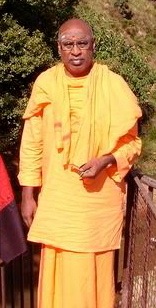
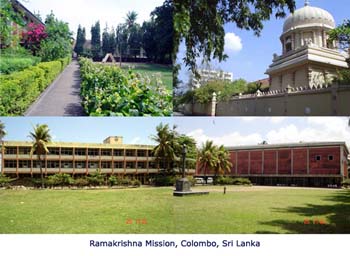
    His Holiness Sri Swami Sarvarupanandaji Maharaj, the Head of our  Sri Lanka Ramakrishna Mission arrived in Durban today. He was visibly joyful in paying a 10 day visit to this Rainbow nation where in many places he will participate in the 156th Birth Anniversary celebrations of Holy Mother Sri Sarada Devi. He was warmly welcomed at the airport by Swamis Brahmarupanandaji, Saradaprabhanandaji, self and Chairperson Ramesh Ishwarlaal with some senior officials of the Centre. I cannot but remember Revered Sarvarupanandaji’s amiable nature when he was part of a team of monks who came to Seva Pratishthan to assist the Administrator-monks during service dislocation for a short period. He could carry every one with him by his jovial and pleasant behaviour.

    Swami Sarvarupanandaji

    Early days

    Revered Maharaj started as a volunteer in the Salem Ashram in 1962. He formally joined the Ramakrishna Math and Mission in 1969 and was initiated into spiritual life by Srimat Swami Vireswaranandaji – the 10th President of the Ramakrishna Math and Mission and also was ordained a monk of the Ramakrishna Order in 1979.

    Stint of service

    He has served extensively in many of the Ramakrishna Branches starting at the Salem Ashram from 1969 to 1982, at the Singapore Ashram from 1983 to 1991 and a short period at the Sevaprathistan Hospital. From 1991 to 1998 he served at the Madurai Math, and 1998 to 2004 at the Coimbatore Vidyalaya.

    In 2004 he was appointed the President of the Ooty Math where he served till 2006. In 2006 he was appointed the Head of the Ramakrishna Mission in Colombo, and continues to serve in this capacity currently.

    Colombo Centre

    The Colombo Centre is engaged in a number of ongoing spiritual and welfare  programmes to assist the communities of Sri Lanka. These include: spiritual discourses and retreats, medical services, poverty relief, education for youth and personality development, Sunday School for religious education where nearly a 1000 children attend weekly. Of special significance is the work done at times of natural disasters, the most recent being the Tsunami – when  1000’s of families were affected. The Mission adopted a village and built 116 two storey houses to rehabilitate those affected. The Mission is also currently engaged in assisting Internally Displaced People due to the civil war in Sri Lanka. More than 46,000 people are being fed and provided assistance every month.

    His public program in South Africa would be as below.

    DATE PROGRAMME
    Saturday,12 December Birth Anniversary Celebration of Sri Sarada Devi
    Topic : “Life & Teachings of Holy Mother”
    Time : 4:00 – 5:30 p.m.
    Venue : Ramakrishna Centre, Headquarters, 8 Montreal Road, Glen Anil
    Sunday,13 December Conference on “Parenting – A Hindu Perspective”(Hosted by the Sri Sarada Devi Ashram)
    Time : 9:30 a.m. – 12:30 p.m.
    Venue  : University of KwaZulu-Natal, Westville Campus
    Monday,14 December Programme at Phoenix Sub-Centre
    Topic : “Life & Teachings of Holy Mother”
    Time : 6:30 – 7:30 p.m.
    Venue : Ramakrishna Centre, 17 Foresthaven Drive, Phoenix
    Tuesday,15 December Programme at Gauteng Sub-Centre
    Topic : “Life & Teachings of Holy Mother”
    Time : 7:00 – 8:00 p.m.
    Venue  : Eagle Canyon Golf Estate, Club House, Blueberry Street, Honeydew, Johannesburg
    Wednesday,16 December Programme at Newcastle Sub-Centre(for all Northern KZN Sub-Centres/ Satsang groups)
    Topic : “Life & Teachings of Holy Mother”
    Time : 4:00 – 6.00 p.m.
    Venue : Ramakrishna Centre, cnr of Centre & Green Streets, Newcastle
    Thursday,17 December Programme at Shree Veeraboga Emperumal Temple
    Topic   : “The Glory of Divine Mother”
    Time : 6:30 – 8:00 p.m.
    Venue : 7 Maharaj Street, Gandhi’s Hill, Tongaat
    Friday,18 December Programme at Chatsworth Sub-Centre
    Topic : “Life & Teachings of Holy Mother”
    Time : 6:30 – 8:00 p.m.
    Venue : Ramakrishna Centre, 26 Moorcross Drive, Moorton, Chatsworth
    Saturday,19 December Programme at Ramakrishna Centre, Headquarters
    Topic : “Life & Teachings of Holy Mother”
    Time : 4:00 – 5:30 p.m.
    Venue : Ramakrishna Centre, Headquarters, 8 Montreal Road, Glen Anil
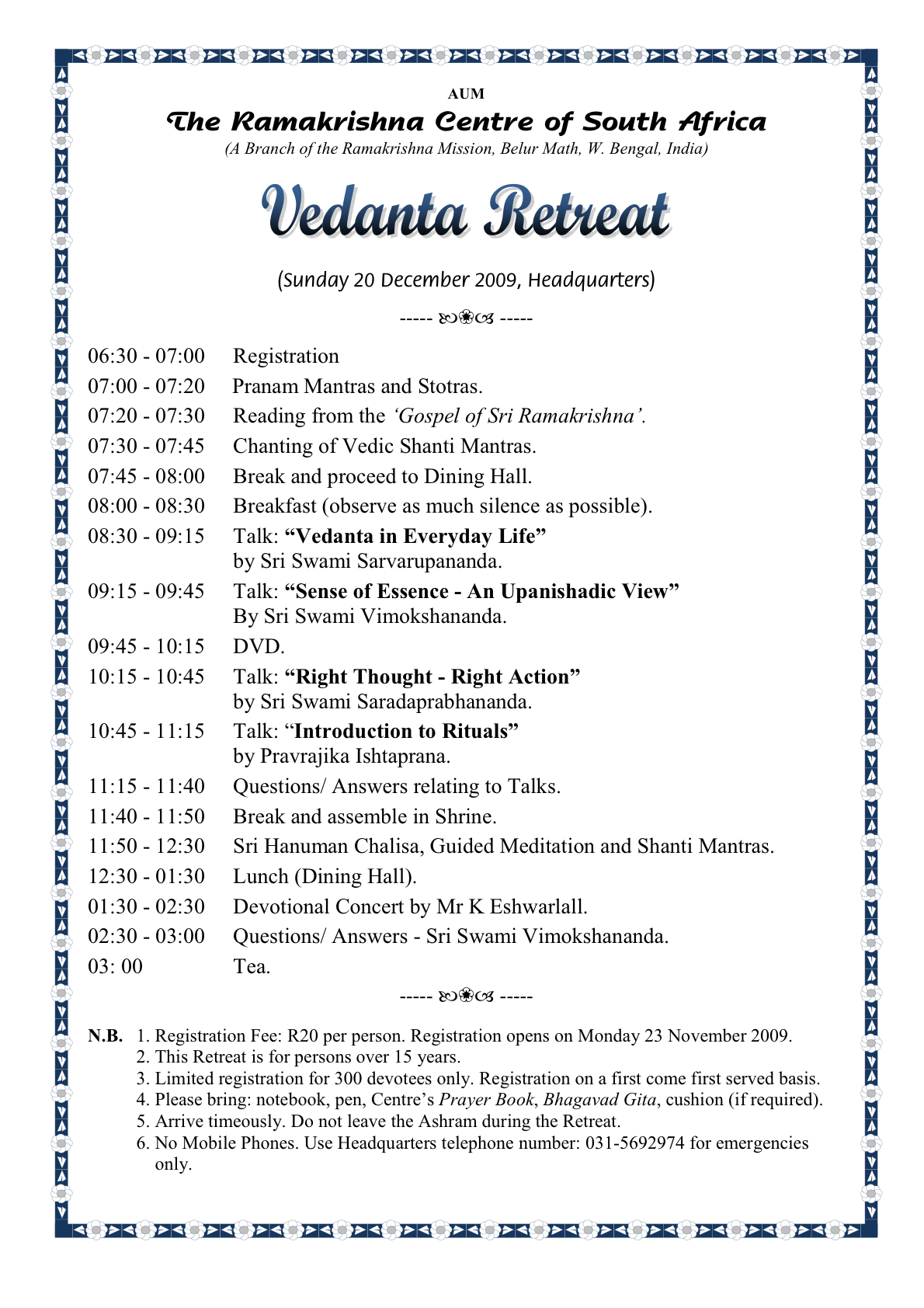
    Sunday,20 December Vedanta Retreat
    Topic   : “Vedanta in Everyday Life”
    Time : 7:00 a.m. – 3:00 p.m.
    Venue : Ramakrishna Centre, Headquarters, 8 Montreal Road, Glen Anil

    (Registration for the above programme is essential.

  • If Sri Ramakrishna was a leaping flame of spiritual realization, Holy Mother was a steady glowing fire of God-consciousness. To the Master, Sri Ramakrishna, she was the goddess of wisdom in human form. To her disciples she was the Divine Mother herself. To her devotees she was a more real mother than their own earthly mother. To the seekers of truth she was the final word, and to sinners she was the last refuge.

    Swami Adiswarananda, in his Introduction to the book – SRI SARADA DEVI, THE HOLY MOTHER Her Teachings and Conversations

    – Translated by Swami Nikhilananda

    Today is the janma tithi of the Holy Mother. On this happy occasion my heartfelt greetings to every one! When I was in India, it was always a special largesse for me to listen to the long-standing devotees who would lovingly explain how they were latched onto the ‘spiritual spell’ of Holy Mother, due to whom their lives got eventually transformed. And South Africa devotees too do not lag behind. Many here, have such wonderful episodes, listening to them is indeed a ‘sadhana’ for me.

    One SA devotee, recalling her divine dream says that it makes her hair stand on ends and somewhat emotional …. emotional in the sense that, she longs within – would she ever see Mother face to face any time? I reproduce some excerpts from what she wrote to me:

    “In my dream … I was cleaning the altar, and as I was about to clean the Holy Mother’s picture, when lo! and behold! Mother started talking to me! She told me that her head and neck was paining. I asked Mother, if I could perhaps massage Her head and back. When I went close to Mother almost touching Her………… I felt that Her hair was dripping with water.

    Mother’s face was real and I was so close to Her… Her face was so motherly, so ordinary and so full of love…yet I saw an indescribable radiance.  I could see clearly her long black, slightly wavy hair, I was well pleased!  I could clearly mark her forehead, it had a red dot and red sindoor on the middle parting of Her hair.  I stared in bewilderment! After a long while, I could see myself telling Mother that … Her hair needs to be dried, (In my dream I am looking for a blow drier). I then saw that I needed to straighten Mother’s back because she was leaning in an awkward way. I gazed at Mother wondering if this is really true!

    When I woke up, I was not my normal self, I had mixed emotions…. Is Mother in real pain? Is this some type of message for me? What was that She desired to indicate to me? But I knew IT WAS A DIVINE DREAM. I intuitively decided to go to the ashram immediately to check the picture of Mother. To my great amazement, I saw Mother’s picture leaning way back in such an uncomfortable way. I straightened the picture-frame, and placed it in the proper position. I cherish this dream because not only Mother utilised me as an instrument in Her work but also chose to convey me Her inconvenience.”

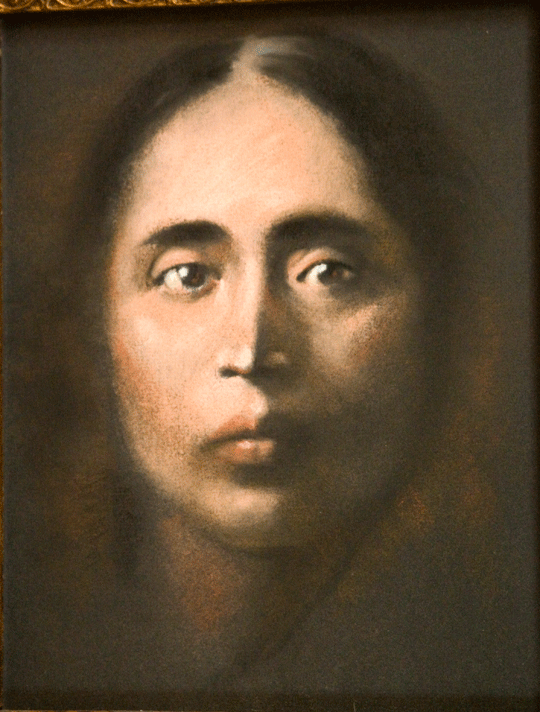
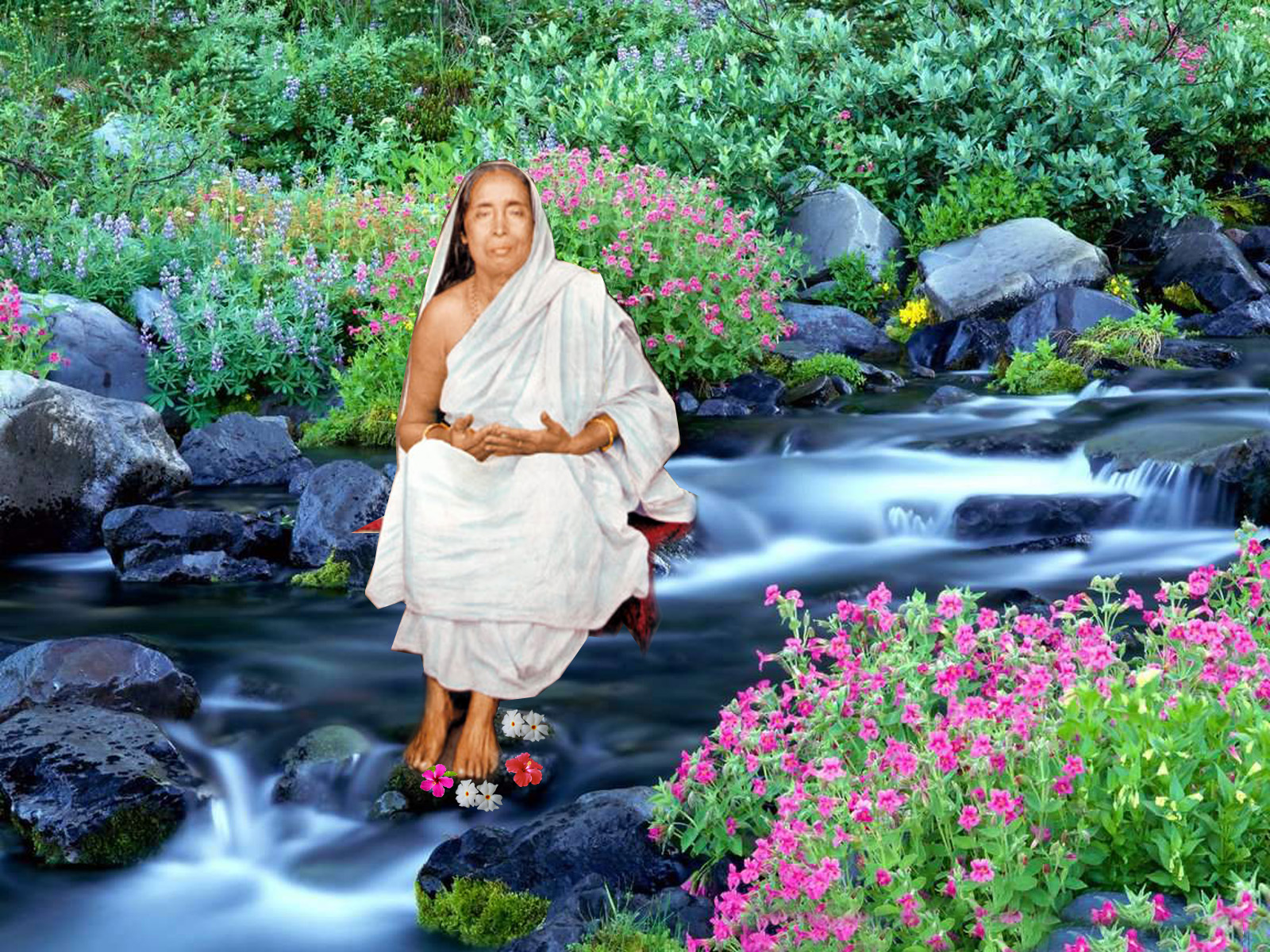
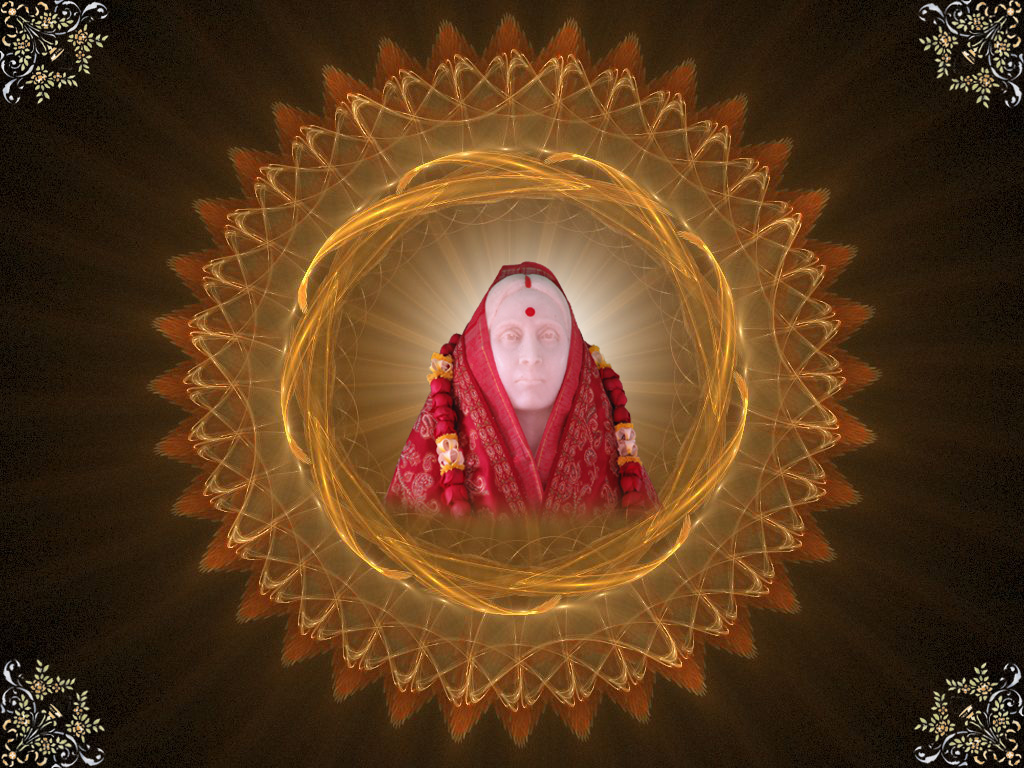
    Here are some digital delights contributed by Dr S Adhinarayanan from New Delhi, India, who is now at Copenhagen for the Global Summit on Climate Change. Despite his busy schedule, he found time to prepare the below given portraits (I envy! How much his mind would have been involved in the rupa-dhyaana – meditation on form – of Holy Mother!) while readying his presentation – An Approach paper on “Microbial Solutions for a sustainable Global Environment”. We wish him a very successful session!

    Sarada Devi

    =========================

    Sarada Devi

    =========================

    Sarada Devi

    =========================

    SARADA DEVI

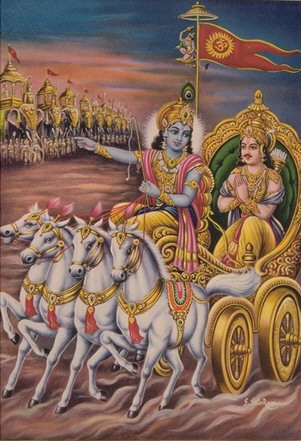
  • 'Krishnam vande jagadgurum' I bow down to Krishna, the World-Teacher – courtesy: HinduWebGraphics

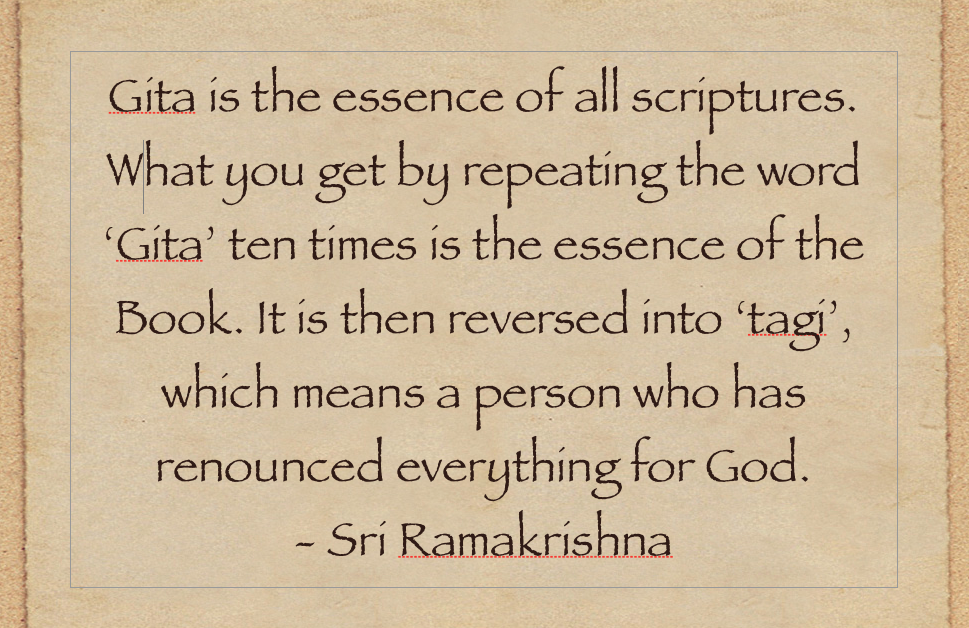
    Today we celebrate Gita jayanti. The Bhagavad Gita forms part of the great Indian Epic, the Mahabharata. The words of this “song celestial” have flowed from the Lord, Sri Krishna Himself. The Gita chanting is generally preceded with what is known as “Gita Dhyanam” – nine introductory verses in praise of Bhagavad Gita. Originally published in our quarterly magazine “JYOTI” of July-September 2007 issue, this article, focussed on seventh verse, was transcribed from the weekly Gita Talks that I deliver on Tuesdays, between 7 and 8 p.m. at the Ramakrishna Centre, Glen Anil.

    Let us recollect what Swami Vivekananda says:

    Gita is the best commentary we have on the Vedanta philosophy – curiously enough the scene is laid on the battlefield, where Krishna teaches this philosophy to Arjuna; and the doctrine which stands out luminously in every page of the Gita is intense activity, but in the midst of it, eternal calmness. This is the secret of work.

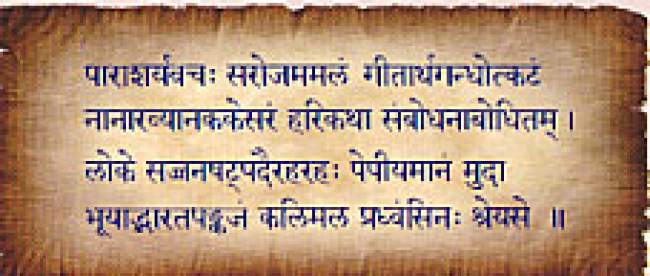
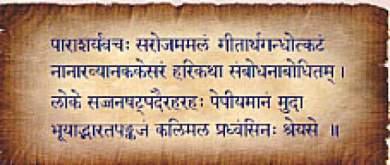
    May this lotus of the Mahabharata, born in the lake of the words of the son of Parashara (Vyasa), sweet with the fragrance of the meaning of the Gita, with many stories as its stamens, fully opened by the discourses on Hari, the destroyer of the sins of Kali, and drunk joyously day by day by the six-legged bees of good men in the world, become the bestower of good to us.     Gita Dhyanam, 7

    It is customary to recite the meditative verses (dhyana shlokas) before beginning the study of Srimad Bhagavad Gita proper.  The poet-devotee, who composed these nine verses, has charmingly explained the purpose, principle and the practice of the Gita in these meditative verses.

    Vast and deep

    In the above seventh verse, he stresses the utmost importance of the knowledge contained in the Mahabharata.  He says that the Gita is like a full-blown lotus, grown in the vast lake of words dictated by the son of the Sage Parashara, thereby meaning Sri Veda Vyasa (author of the Mahabharata).  The significance of not saying the name of Vyasa but indicating him as son of Parashara lies in the wonderful combination of wisdom of the Rishi with practical sense of a fisher woman, Satyavati who was the mother of Vyasa.  Sage Vyasa, like his father Parashara, had a broad, vast knowledge of the Vedas and like his mother, Satyavati, who would go deep into the river to catch fish, also went deep into the meaning of Vedas.

    Petals and fragrance

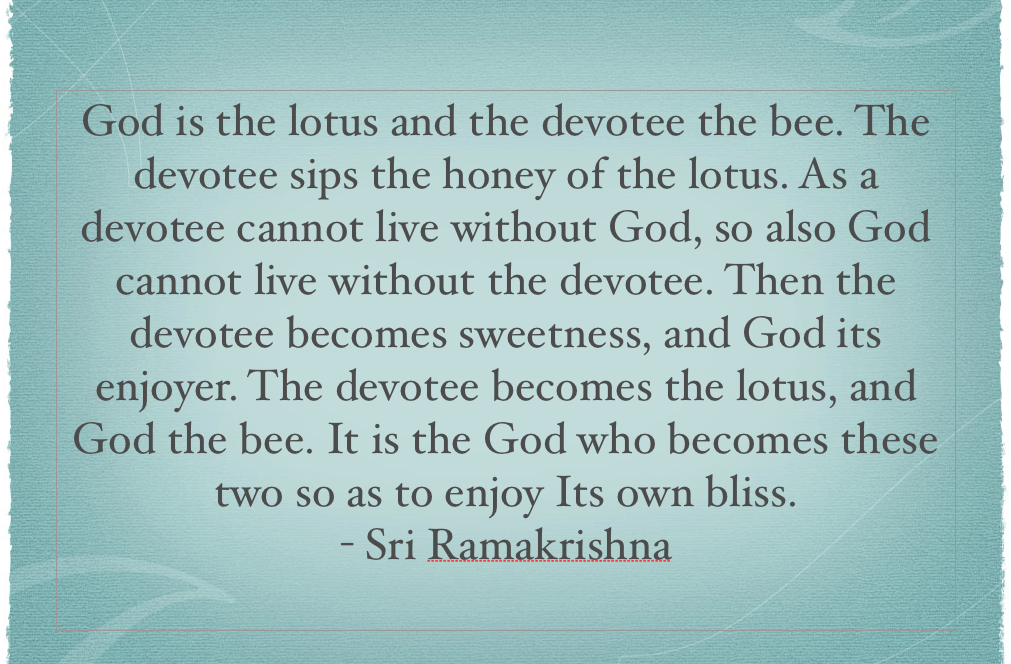
    The full-blown lotus has an extremely sweet fragrance and many soft petals.  The insight of the Gita is said to be the fragrance and the varied stories cum sub-stories that form the elaborate Mahabharata, the petals.  The lotus is full blown by the speech of Lord Sri Krishna, who is verily Hari Himself.

    Bee Pic3The poet-devotee further says that in this world noble men joyously drink, day by day meaning again and again, the nectar issuing from the lotus flower like “a six-legged bee”.

    The drink and the drunk

    A bee continues its unending search for nectar from many flowers.  But it is the flower that is most beautiful and exuberantly filled with sweet honey that attracts it the most.  Likewise, we have a number of scriptures.  Of them, Srimad Bhagavad Gita, which forms part of the world’s largest epic, the Mahabharata, contains that nectar which makes the learner go beyond birth and death.

    The insight that the Gita provides in controlling our life’s destiny is unparallel.  The Gita gives us wonderful courage to deal with the many challenges that life poses.  In order to gain the rich experience that the Gita enumerates, noblemen – men of character – searching for the true meaning of life come to study the Gita.

    The poet-devotee of the meditative verses compares a noble-minded person with the untiring bee.  Bees, unlike other insects or birds, go much deeper into flowers.  They go to the very source.
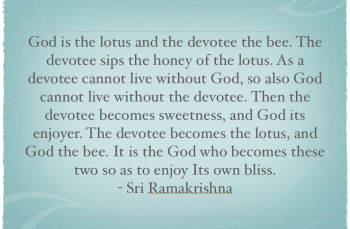
    So it is clear that if we want to obtain the knowledge of the Gita, superficial study is not enough.  Merely chanting the Gita may give us a sense of peace; a little more study may lead us on a good path to enjoy the blessings of a noble life.  But only a deeper study can provide the knowledge of Atman (Soul) which is the real nectar of the Gita.  Like a bee, we must go deep – meditate deeply on each verse of the Gita.  This will light up the lamp of knowledge that is within each of us.  Mahapurush Maharaj, known as Swami Shivananda, a direct disciple of Sri Ramakrishna once said, “…You must meditate on them.  Then, only will you assimilate them.  Hari Maharaj [Swami Turiyananda] used to meditate on each verse until he had mastered it.”

    Legs that lead

    Furthermore, the poet-devotee has used the words “six-legged” when describing the bee.  This also has a profound significance.  Merely being noble may not be sufficient to understand the inner meaning of the Gita.  Perhaps the man who is only “two-legged” has to acquire another “4 legs” in order to grasp the inner meaning of the words that flow from Lord Sri Krishna’s lips.
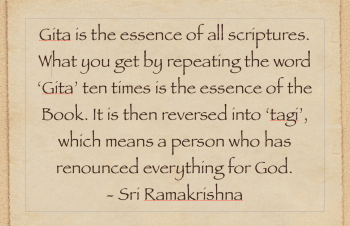
    What then, are the “six-legs” that a noble man has to possess?  They are discrimination, detachment, devotion, deep yearning, deliberate effort and divine knowledge,.  Once a person of noble character possesses these “six-legs” he will be able to hold onto the slippery petals and drive himself deep into the nectar of inner meaning.  Therefore, a study once or twice is not enough.  “Again and again” one must devotedly pursue the study so that the bad samskaras – mental impressions – that are gained from birth to birth can be removed by continuous study of the Gita.

    Thus the poet-devotee concludes in this verse of Dhyana Shloka on Srimad Bhagavad Gita, propounded by the Lord Himself, is great, bestows welfare and removes all the impurities that are born of this age (Kali Yuga).

    =======================================================