A Micro-Blog from Swami Vimokshananda – earlier at Durban, Singapore and Dublin – now at Yelagiri Hills, Tamil Nadu, India – "A private diary for public consumption!"
Hearty, Happy Diwali Greetings! May this Diwali brighten up your life, may it lighten your burden and may it enlighten your path!
Illumination on the night of Diwali at Master’s altar in Sri Ramakrishna Temple, Durban…
Swami Saradaprabhanandaji, officials from Headquarters and all devotees here join me in wishing you all a wonderful Diwali !
Ray of hope?
Our world today is at the crossroads. While charity to help the poor and needy is increasing, it is disconcerting to see the rise of violence – domestic or national, crime, obscenity, corruption and other expressions of ill-gotten wealth. Serious people devoted to God and godly means of living are indeed worrying about the future prospects of their children. Is there, among the gloomy cloudiness, any shiny ray of hope?
It is in this context that the various celebrations that have come to us from time immemorial from the spiritual land of Bharat hold the clue. One of the most loved celebration of all the Hindus the world over, is the Festival of Lights – Diwali, also called Deepavali. This ‘Five-day Festival’, as I explained in my last year Diwali post, traces the spiritual expansion of human growth culminating in the gaining of knowledge of God.
Rama’s return
Diwali signifies lighting of lamps in every household on the Amavasya night that follows the bright fortnight after Vijaya Dashami. No doubt this occasion marks joy and merriment. On the Diwali Day, rows of lamps decorate the houses and presents are exchanged. Diwali, in the north of India, is associated with the coronation of Lord Sri Rama when he returned to Ayodhya (in Uttar Pradesh) after vanquishing the demon King of Ceylon, Ravana on the day of Dasshera. Sri Ram had been in exile for fourteen years and the people were pleased to see his return to Ayodhya.
We get a graphic description of how the people of Ayodhya welcomed Sri Rama, Mother Sita and others in Sri Ramacharitamanasa written by the great saint Tulasidas.
He says that “when the information reached the citizens, men and women all ran out in their joy (to meet their Lord). With gold plates containing curds, Durva grass, the sacred yellow pigment known by the name of Gorocana, fruits and flowers and young leaves of the sacred Tulasi (basil) plant, the root of all blessings, ladies sallied forth with the stately gait of an elephant, singing as they went.
All ran out just as they happened to be and did not take children or old folk with them. People asked one another: “Brother, did you see the gracious Lord of the Raghus?” Having come to know of the Lord’s advent, the city of Ayodhya became a mine of all beauty. A delightful breeze breathed soft, cool and fragrant. The Sarayu rolled down crystal clear water.
I was talking to Rivajh Singh, a young lad the other day about painting of themes from our scriptures. He is a student of Architecture and deeply interested in paintings. The above one was drawn by him with acrylics in a matter of a few hours depicting the theme of Diwali namely, Tyaga (sacrifice), Seva (service) and Prema (love). Can you identify which portion depicts which theme? And thanks Rivajh for your lovely gift on Diwali day!
Again continuing to explain the warmth of reception accorded to Sri Rama, saint Tulasidas says that “the citizens were transported with joy at the sight of the Lord. All the woes begotten of their separation from the Lord now ended.
“Seeing all the people impatient in their love to meet the Lord, the All-merciful Slayer of Khara wrought a miracle. He forthwith appeared in countless forms and in this way the gracious Lord met everybody in an appropriate manner.
“amita rupa pragate tehi kala, jatha joga mile sabahi kripala”
Saint Tulasidas just wonders how the mystery of Sri Rama in taking many forms and meeting each citizen could not be comprehended by anyone! Here in the words of Sri Ramakrishna, God became the ‘needle’ and the bhakta, the ‘magnet’.
Soundless Silence
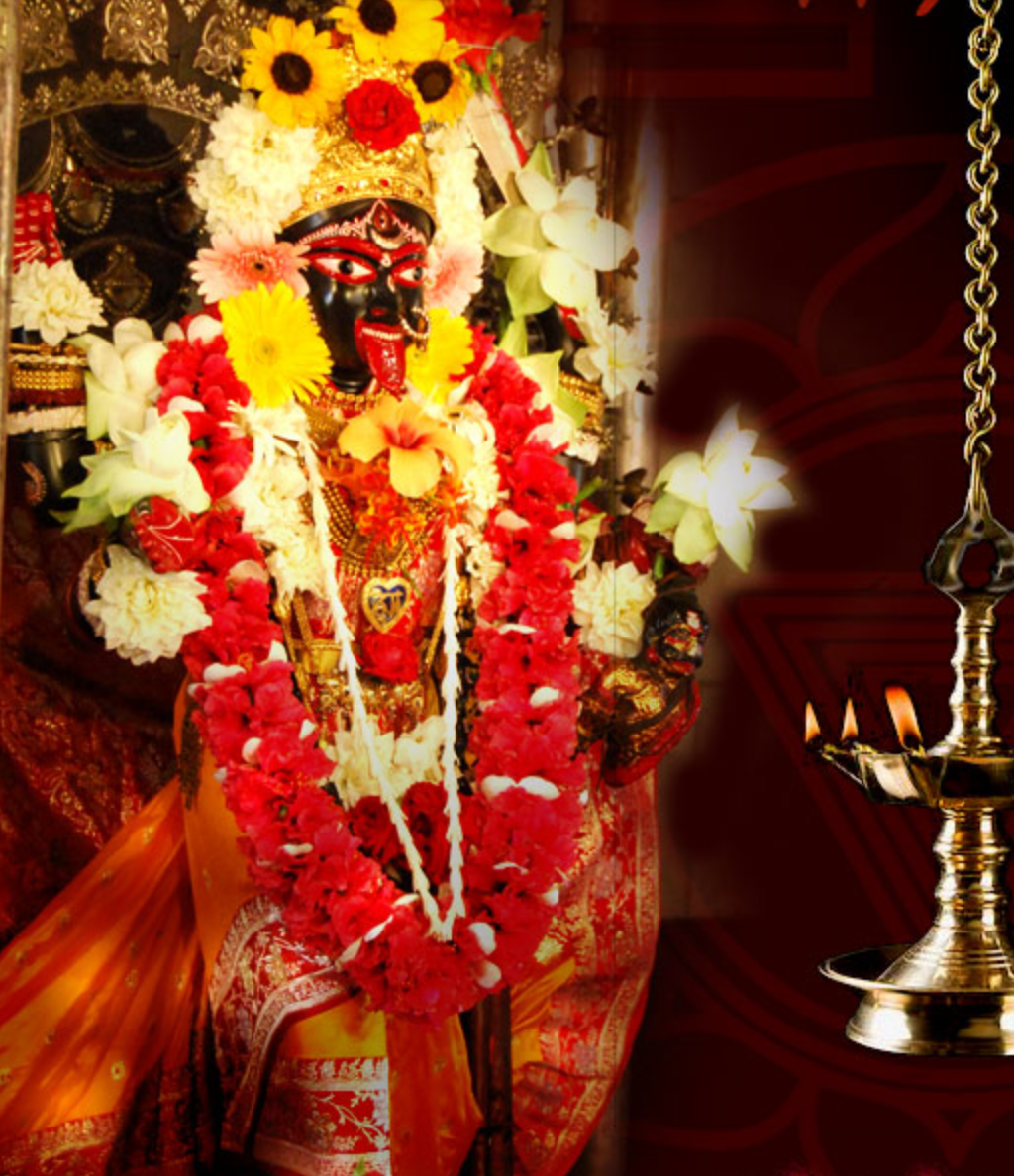
Diwali is also indeed associated with the worship of Divine Mother in the form of Kali. The famous Sanskrit hymn Sri Durga Saptashati called Sri Sri Chandi in short gave Kali worship a new meaning.
When the Devi Chandika battles with different demons, there emanates from Her forehead the awesome and ferocious Kali. As Her origin is associated with the third eye, called ajna chakra in the yogic parlance, She represents the intellectual and intuitive faculties. Kali seeks out and destroys the little lower self (which is ruled by rajas and tamas) so that it will obtain progressively higher levels of knowledge. This chakra denotes the silence of a soundless state when the true knowledge dawns.
The worship of the Divine Mother Sri Sri Kali at Belur Math on 13 November 2012, will be LIVE webcast at http://www.belurmath.tv
Lamp of knowledge
This festival gives us, Hindus, an opportunity to go beyond the external extravaganza. It offers an opportunity to dive deep into one’s heart and search for all types of demoniac qualities residing inside. Thus, the need is felt to clear the darkness from the heart. To drive away the darkness we have to light the lamp thus let the Light of knowledge in.
Sri Krishna encountered the demon Narakasura, who before his death entreated the Lord to celebrate with lighting of diya and burning firecrackers. We all do the latter part but do not pay attention in removing the darkness. As Swami Vivekananda says, darkness in a sealed room over one thousand years will instantly vanish the moment a matchstick is lighted. Knowledge of God is light. When a lamp is lit on Diwali, just pray to your chosen ideal that the darkness of ignorance be removed from your heart.
Destroying the darkness
It is in the Gita that ultimately the philosophy of Diwali emerges. In the Bhagavad Gita, Sri Krishna says that out of compassion for the devotees, He, residing within their hearts, certainly destroys the darkness born of ignorance with the radiant lamp of knowledge. (Ch X.11). In The Gospel of Sri Ramakrishna, we find Master singing melodiously this song:
“Light up O Mind! Light up! True wisdom’s shining lamp and let it burn with steady flame unceasingly in your heart”
Hence, while celebrating Diwali, let us pray to the Divinity (in whatever form one may believe in) to bestow the right knowledge by which we can lead a peaceful and prosperous life with service to the poor and needy.
It is my fervent prayer that each one of us be blessed with such noble and divine qualities! May the light of the lamp burn brightly in our hearts on this holy occasion of Diwali !
असतो मा सद्गमय | तमसो मा ज्योतिर्गमय | मृत्योर् मा अमृतं गमय | ॐ शांति: शांति: शांति: || Om asato ma sat gamaya | Tamaso ma jotir gamaya | Mrityor ma amritam gamaya | Om shanti shanti shantihi ||
A Summary written by my Guest-writer Kissoon Behari continues from last week’s post. In today’s post he deals with Section Three of the Devi Mahatmyam. Chapters 5 to 13 fall under this Section which are dedicated to Mahasaraswati. Thus the Summary concludes with this instalment.
SECTION THREE
CHAPTER 5
Sumbha and Nisumbha, two proud and powerful demons, had conquered the three worlds and looted the heavens. The exiled devas remembered the boon that the Divine Mother had granted them: ‘If they called upon Her in times of difficulties and troubles, She would put an immediate end to all their sorrows.’ So they went to the Himalaya Mountain and sang in praise of the Devi and worshipped Her in various ways. The hymn that the devas sang is called the “Aparajita Stutih”. (Aparajita means “The Invincible”.) This stotra is also known as the “Tantrika Devi Sukta”.
Mother Parvati came there to bathe in the Ganga. When She asked the devas whom they were praising, an auspicious goddess emerged from her physical body, and answered, “This hymn is addressed to Me by the devas who have all been defeated by Sumbha and Nisumbha.”
After the shining Ambika had issued forth, Mother Parvati turned dark, and was thereafter called Kalika.
Canda and Munda, two servants of Sumbha and Nisumbha, informed their lords of the exceedingly beautiful Ambika. Sumbha, filled with a desire to possess the Devi, sent a messenger to Her so that She might quickly come to them in love. But the Mother Durga answered that She had made a ‘foolish’ promise: Only he who conquered Her in battle and removed Her pride would be Her husband. The messenger indignantly returned.
CHAPTER 6
The reply annoyed and angered Sumbha. He then sent Dhumralocana to fetch Her, by force, if necessary. But the Devi reduced him to ashes by merely uttering the syllable ‘hoom’. The army, too, was destroyed.
Sumbha was enraged when he heard of the fate of his general and his army. In his fury, he ordered Canda and Munda to bring Her by force.
CHAPTER 7
When Devi Ambika, seated on Her lion on a golden peak, saw the army of demons, Her face became dark with anger. From Her forehead issued Kali. Her form was terrible, and she was armed with a sword and noose. She destroyed the entire host of demons and beheaded Canda and Munda, and presented their heads to Candika. Because She had slain Canda and Munda, Mother Candika playfully said that She (Kali) would be famed as ‘Camunda’!
CHAPTER 8
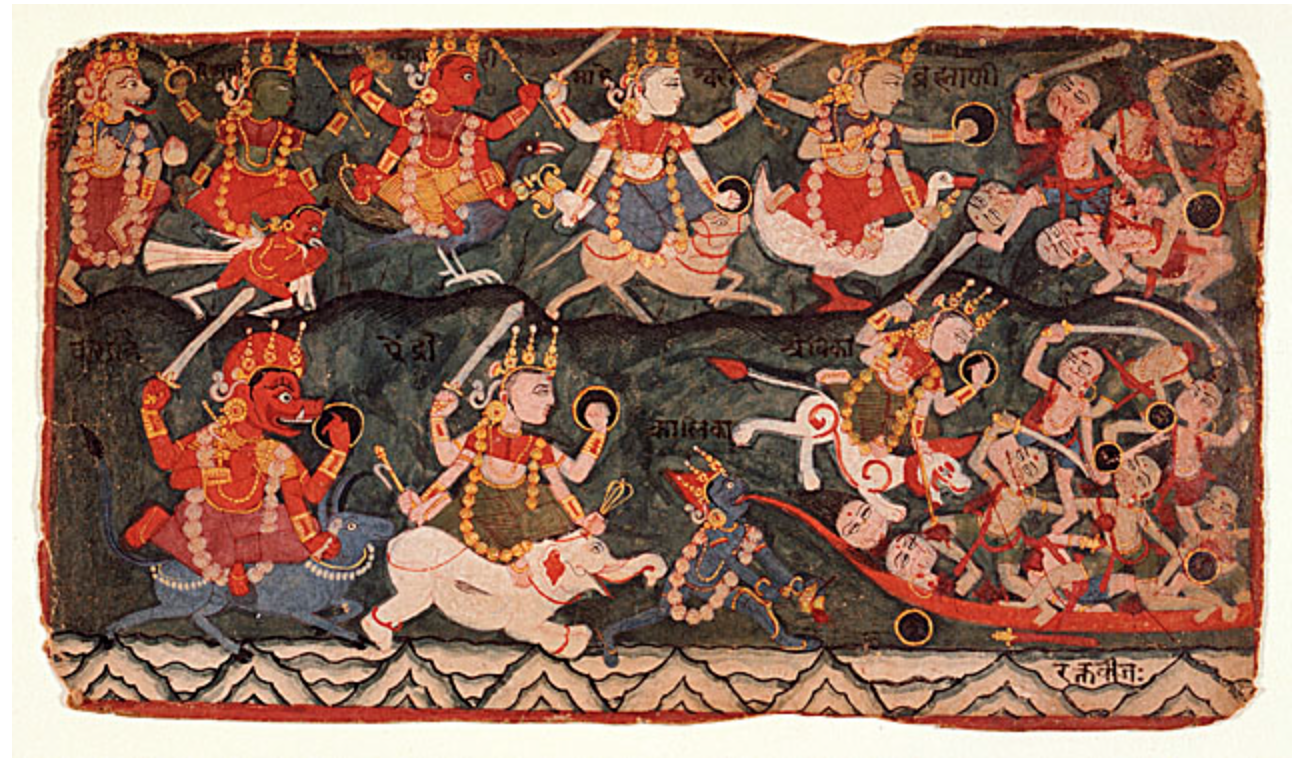
Sumbha was overcome and infuriated. He ordered the immediate mobilisation of all demons. The Divine Mother and Kali were surrounded on all sides. Then there issued from the bodies of all the devas their saktis who went to help Candika, Whatever was the form of the deva, whatever his ornaments and weapons, whatever his vehicle – in that very form his saktl advanced to fight the asuras. Thus from Lord Brahma emerged Brahmani, carrying a rosary and water pot, and riding on a chariot drawn by swans. Mahesvari, the sakti of Lord Siva, was seated on a bull, holding a trident and adorned with the crescent moon. The sakti of Lord Visnu was seated on Garuda, holding conch, club, bow and sword.
The Goddess Ambika (here identified with: Durga or Chandi) Leading the Eight Matrikas in Battle Against the Demon Raktabija, Folio from a Devi Mahatmya – (top row, from the left) Narashmi, Vaishnavi, Kumari, Maheshvari, Brahmi. (bottom row, from left) Varahi, Aindri and Chamunda, drinking the blood of demons (on right) arising from Raktabija’s blood and Ambika.
From the body of the Devi Herself there issued her own sakti. It was fierce and terrible.
This sakti sent Lord Siva as a messenger to Sumbha and Nisumbha with the message: “The demons should let Indra and the other gods once again rule the three worlds, and enjoy the sacrificial oblations. The demons should go to the nether world if they wished to live.”
The wrath and indignation of the demons were roused, and they made an onslaught on the Devi. But the saktfs crushed the demon hordes.
Seeing this, the great asura Raktabija strode forward into battle. When his drops of blood fell to the ground, there rose from the earth as many asuras as powerful and fierce as Raktabija himself. The more he was wounded and the more blood fell on the ground, the greater grew the demon forces.
Then Candika asked Kali (Camunda) to quickly take in the drops of blood from Raktabija as She struck him. In this way, Raktabija grew weaker and weaker, and eventually lost his powers. Having become bloodless, the once powerful demon fell helpless on the ground, never to rise again.
CHAPTER 9
Enraged by the annihilation of Raktabija and his army, Sumbha and Nisumbha made an assault on the Devi. Nisumbha struck Her on the head, but She rendered his attack ineffectual, and flung him on the ground. Seeing his brother unconscious, Sumbha became furious. He approached Her in his chariot, splendid and shining, holding excellent weapons in his eight arms.
She smote Sumbha who lost consciousness. Then up rose Nisumbha and gave battle to the Devi. Candika pierced him in his heart. From his heart came forth another person of great valour and strength. The Devi laughed and severed his head.
CHAPTER 10
When Sumbha saw his brother who was as dear to him as his own life was slain, he was filled with a raging fury. He accused Her of being puffed up with the pride but was resorting to the strength of others.
The Devi smilingly answered, “I am all alone in the world. Who else is there beside Me?” So saying, She absorbed all the saktis into Herself and stood alone.
A long and dreadful combat ensued. The Devi destroyed all his weapons, whirled him around and flung him down to the ground, and pierced him in the chest with a deadly dart.
CHAPTER 11
After the destruction of Sumbha and the annihilation of the demons, the universe became happy and there was peace everywhere. Then the joyous devas sang praises to the Divine Mother. This hymn is known as the “Narayan! Stutih”.
The devas received a boon from the Devi: She would destroy all their enemies and all the afflictions in the three worlds. She added that She would overcome all obstacles and difficulties of anyone who, with concentrated mind and deep devotion, prayed to Her constantly with these hymns.
Having blessed them all, the Devi vanished on the spot as the gods looked on.
CHAPTER 12
In this chapter, the Divine Mother herself lists the benefits of reciting the DM.
The Devi will put an end to all troubles of one who constantly recites the DM with devotion and concentration. These include all forms of afflictions from external sources, such as from natural calamities and people and animals; as well as from internal or psychological causes. The DM should be recited on the 8th, 9th and 14th days of the month.
She will always dwell where this poem is chanted. Even if the householder devotees perform her sacrifice and worship without proper knowledge of the rituals, She will still happily accept them. The chanting of the hymns makes the mind pure, and glorifying Her brings the devotees closer to Her.
The Rsi concludes by saying that it is the Devi who has created the universe, and She who causes delusion. Taking the form of Lakshmi, She bestows prosperity; but she also brings ruin and destruction. When She is praised and worshipped with flowers, incense, perfumes, etc, She bestows all forms of wealth and joys and a mind that turns towards dharma.
CHAPTER 13
The Rsi once more says that it is the Devi who brings about delusion even in men such as the king and the merchant who have the ability to discriminate. He entreats them to worship the Devi who grants both worldly and heavenly enjoyments as well as final liberation from the cycle of births and deaths.
Suratha and Samadhi wanted a vision of the Mother. They thus practised penances and control of mind and senses, and worshipped the Mother with puja and havan for three years. Then Mother appeared to them and granted them boons. The king would regain his lost kingdom, and when he died, he would be born as Savarni, the son the Surya, and become the eighth Manu.
The merchant received that supreme knowledge that brings about final liberation.
=================================
SPIRITUAL IMPORT
SECTION THREE
SUMBHA and NISUMBHA
1 When Mother Parvati asks “Who is being worshipped?” Ambika emerges from within Her and answers. The extremes of ignorance and knowledge are seen in Her. Spirit and knowledge are of the quality of light, hence Ambika is also called “Gauri, which means “The Fair”.
Within each of us the same range of possibilities exists. All knowledge is within us, and each soul is potentially divine. The more this divinity is expressed, the more does one shine.
2 The aspect of evolution is stressed in Mother Parvati: As daughter of the Himalaya Mountain, she is the mineral kingdom; Her mount is the lion, king of beasts; and as Kausiki, She is knowledge, secular and spiritual. Thus, in Her, all levels and aspects of creation are symbolically embodied, and She is therefore the Supreme Queen.
3 Although the Supreme Divinity is before Canda and Munda, they, being of a tamasic nature, can only see the outward beauty of the Mother. The messenger, too, is unable to understand the deeper significance behind the Mother’s reply: “He who will conquer Me in battle, he who will break My pride, he who is My match in the world in strength shall be My husband.” Siva is Her husband. He is beyond the control of the gunas, completely free from attachment to the world. As the world with its maya cannot bind him, we say that he has conquered the world, that is, has conquered the pride of the Mother when She has expressed Herself as the universe. None of the demons have any notion of the divinity they confront. Knowledge attained is proportional to one’s sacrifice or austerity (tapas) and self-surrender.
4 Sumbha and Nisumbha are really robbers who have looted the world of all its material grandeur. What an irony that, in a bid to allure the Divine Mother to them, they are offering them to Her who is Herself all wealth and beauty!
5 There is Divine Will and Individual Will. When the Individual Will subordinates itself to the Divine Will, that is, surrenders to Divinity, it is the way to beatitude. But when the Individual Will goes counter to the Divine Will, it is the way to hell – if not hell itself! The devas have such powers and knowledge as will allow them to perform the work of the Mother. But the demons channel all their energies to disrupt Her Divine Plan. Accordingly, a power sufficient to overcome the demons is released by the Divine Mother at different stages in the contest.
Dhumralocana: The name means “smoky-eyed”, and so suggests veiled perception. He is thus ignorance and the grossest state of egoism. The Devi shows annihilates him by a mere “hum”.
Canda and Munda: They were the first to have a vision of Ambika. They represent the lower and more horrible aspect of our ego.
When the Devi Candika encounters these demons, there emanates from Her forehead the awesome and ferocious Kali. As Her origin is associated with the third eye, She represents the intellectual and intuitive faculties.Kali seeks out and destroys the little lower self (which is ruled by rajas and tamas) so that it will attain progressively higher levels of knowledge.
Raktabija: Rakta means “blood” and bija means “seed”. Raktabija thus means one whose seeds are blood. When the blood of Raktabja falls to the ground, it produces demons similar to him. He therefore represents the desires of the mind which endlessly multiply themselves. The killing of Raktabija by Camunda means the destruction of the mental modifications by the awakenings of spiritual consciousness
Sumbha and Nisumbha: Sumbha is the more enlightened aspect of egoism. The word itself means ‘to shine’. Nisumbha is attachment.
Both Sumbha and Nisumbha seek enjoyment in the external world. Hence Sumbha declares, “We are the enjoyers of the best objects”. But they are slaves of their passions.
6 Sumbha accuses Mother Durga of pride and arrogance, but really this is an instance of projecting his own qualities onto Her. She withdraws the Saktis, the numerous powers that She had projected, and stands alone. In this act, She reveals to him that She is the One behind the many, that the entire creation is but Her own Self.
A Summary written by my Guest-writer Kissoon Behari continues from last week’s post. In today’s post he deals with Section Two of the Devi Mahatmyam. Chapters 2 to 4 fall under this Section which are dedicated to Mahalakshmi. The final part will appear in this blog on 7th November, 2012.
SECTION TWO
CHAPTERS 2 and 3
MAHISASURA
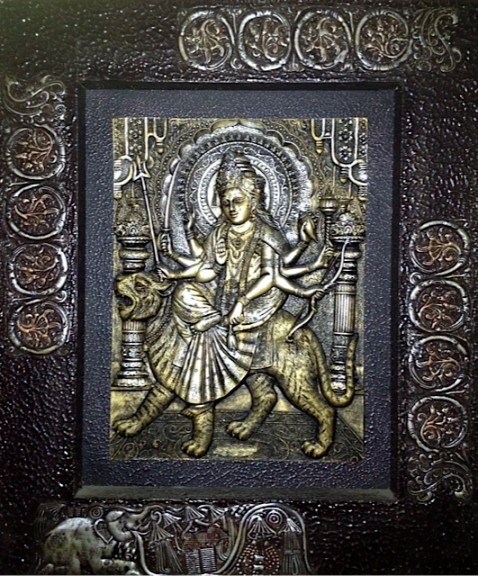
Mahisasura was a powerful demon who conquered the devas and occupied the throne of Indra, the king of the heavens. The gods, headed by Lord Brahma, complained to Lord Visnu and Lord Shiva who were outraged. From their faces as well as from the bodies of the gods there issued forth great masses of light which combined and formed into the Devi. The gods gave Her weapons identical to their own, as well as jewels and ornaments, insignia, and a lion to ride on.
The Devi pervaded the three worlds. Her terrible roar filled the whole universe. It consoled the devas but agitated the asuras. Her sighs became Her battalions and fought the demon hosts. Although Mahisasura had many valiant generals in his army, the Devi destroyed them all.
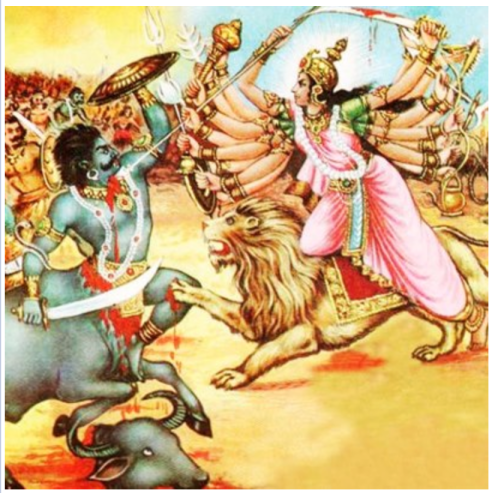
As his army was being destroyed, Mahisasura assumed his buffalo form. The Devi bound the demon with Her noose, but he quitted his buffalo form and became a lion. As soon as She cut off his head, he appeared as a man armed with a sword. When She struck him with Her arrows, he changed into an elephant. As he tugged at Her lion, She cut off his trunk, and the demon resumed his buffalo form.
The Mother then quaffed a divine drink, leapt upon the demon, pressed his neck with Her foot and struck him with Her spear. Mahisasura half issued forth in his real form from the buffalo mouth. The Devi struck off his head with Her great sword. The demon army perished and the gods rejoiced.
CHAPTER 4
Lord Indra and all the devas, with concentrated minds, sang praises to the Devi. This hymn is known as the “Sakradi Stutih”. The Divine Mother was greatly pleased and granted them a boon: Whenever they would think of Her, She would destroy their calamities. And if mortals praised Her with these hymns, She would be gracious towards them and grant them all prosperity.
=============================================
SPIRITUAL IMPORT
SECTION TWO – CHAPTERS 2 – 4
MAHISASURA:
On the evolution ladder, we human beings stand the highest. But having evolved from the animal world, we quite evidently still possess some animalistic tendencies and qualities. Evolution may have stopped at the physical/physiological level, but continues at the psycho-social and spiritual levels. This is essentially a struggle between the lower man in whom animal tendencies are predominant and higher man wanting to express his divinity. This conflict is represented to us in the drama of Mahisaura.
“Mahisa” means a buffalo, an animal which loves filth and mud, and enjoys being dirty. He thus represents the warped mind in the pursuit of shameless pleasures, one whose life is unregulated and wild, and is characterised by indiscrimination, indolence, frivolity, and delusion.
The Devi is expressed through the combined light that emanates from the devas themselves. It is the power of the Devi Herself that is in them. Thus it is not that the devas ‘created’ the Devi; rather, it is that the Devi who is the sum total of the powers of the Devas (and much more!) revealed Herself.
The implication is that to control or overcome our lower nature, one has to use the combined positive resources that lie within one – else each one will be conquered just as the devas were expelled from their heavens one by one. We should remember that while the devas occupy their own heavens, they are also resident in our bodies. Thus Lord Surya is in the eyes, Indra in the hands, etc. (See here an informative article well tabulated)
During the battle with the Devi, Mahisasura changes from one form to another. It is a dramatic portrayal of the evolution process and tendencies that accompany it. Thus, the elephant represents lust, the lion anger. Finally, a man half emerges from the buffalo body. This is the emergence of the higher man. The Devi cuts off his head, that is, She cuts off the head of the ignorant man and by Her grace bestows higher knowledge.
When called to mind in a difficult pass, you remove fear for every person.
When called to mind by those in happiness, you bestow a mind still further pious.
Which Goddess but you, O Dispeller of poverty, pain and fear, has
an ever sympathetic heart for helping everyone?
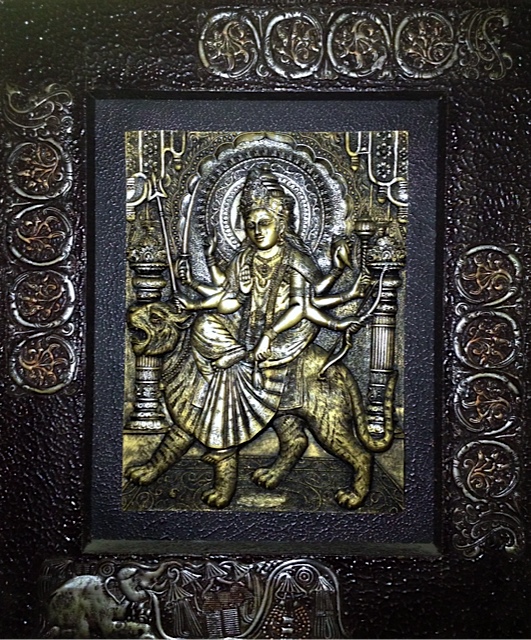
The Composite Image of Divine Mother Durga as worshipped in our Headquarters Belur Math contains Ganesha, Karthik, Lakshmi and Saraswati
Today is Vijaya dashami. My hearty and happy Shubha Vijaya Greetings to every one of you. Brother Saradaprabhanandaji, officials and devotees join me in wishing Mother’s blessings to all.
Here Navaratri was celebrated in all its solemnity. Everywhere i.e., in all our branches, the devotees assembled in large numbers. Three of our centres i.e. HQ, Chatsworth and Pietermaritzburg had, of course did the navaratri function with Sri Sri Durga’s benign form without the demon Mahishasur in murti (3 ft height). These clay images were prepared locally by a lady devotee.
My first Talk during Navaratri function was at Phoenix Sub-centre. There, more than 500 senior citizens were present to whom I narrated the glory of Goddess Durga. On the same evening, I had the opportunity to visit our Chatsworth branch where I was blessed to speak on “Saptashloki Durga”. The second day took me to Pietermaritzburg and in our Sub-centre there I dealt with the same topic. On the third day I was in Estcourt where I attended the Satsang at Maha Gayatri Mandir. The temple was packed to its capacity, attended by almost all Hindu groups. There I spoke on the three functions of the Divine Mother viz., the projection, sustenance, and dissolution.
On the fourth day, of course on my return, I stopped at Pietermaritzburg to attend the grand function organised by PMB Sanatan Ved Dharam Sabha. Here more than 300 people participated. My subject of Talk was on the “Three Aspects of Sri Durga” namely Mahakali, Mahalakshmi and Mahasaraswati. I spent my Fifth and sixth days in performing morning puja and attending the evening satsangs at Durban HQ and quietly listening to different speakers. On the 7th day at the same Satsang, I took up again explaining the “Saptashloki Durga” verses. On the 8th evening I was invited by Redcliff Hindu Temple where again I spoke on the glory of Goddess Durga. On 9th evening which is Vijaya Dashami day, the topic “Significance of Vijaya Dashami” was dealt with.
In all this running about and stating the events with lots of “I” (which perhaps not pleasing to read), what was the feeling in the core of my heart? That She, the Divine Mother has been acting, directing and instructing and making me a worthy instrument in Her hands. I was ever praying that this blissful mood may continue.
On Mahashtami day, after Master’s puja (that included the Kalash puja, Ganesha puja and Jai Durga’s puja) at the Temple, we gathered at the Nischalananda Hall where Sri Durga Havan was performed to the chanting of entire Devi Mahatmyam. The Chamunda mantra was recited 108 times by all the assembled in unison at every oblation of vilva leaf into the sacrificial fire.
The tradition of observing Navaratri here among the Hindus is a mixture of North-South combination. Our Centre follows the mainstream practice and hence the Bengal type Durga puja is not yet inroduced. Thus the first three days were dedicated to Mahakali, next 3 days to Mahalakshmi and the last 3 days to Mahasaraswati. The 10th day is of course Dasserah or Vijaya dashami when Mother Saraswati is invoked. This year we had only 8 days as the 2nd and 3rd tithi fell on the second day itself. It is to be noted that throughout the Navaratri days we had everyday Satsang in the evening. On the Vijaya dashami day the sky was partly clouded, not windy and one by one the murtis, after the farewell puja at the sea beach, were immersed in the surging waters. On that day when the murti was taken out for immersion, Saraswati’s picture was kept.
All the days were spent in a blissful mood for which we are grateful to our Sri Thakur, Ma and Swamiji. And this feeling of joy is nonetheless due to the gracious blessings of all senior monks and loving vibrations from the younger brothers all over the globe.
During the Navaratri we all read portions from Devi Mahatmyam. This is an authoritative scripture on the Mother worship. Many devotees though read it with all faith and devotion want to know what the story in brief is. Reading the English translation of the Sanskrit verses “as it is” would probably drown a person in extreme details and hence would lose the thread of the story. Here comes the importance of having a neat narration without the complexities of descriptions so that at one glance, the reader who is not conversant with Indian vernaculars gets the core teaching of this marvellous scripture.
I have no hesitation to point out that recently our devotee-brother Kissoon Behari sent me one such rendition that I was greatly elated at his attempt to put the prose in as simple terms as ever and understandable by even a child. I believe that the readers of this blog would surely find this not only interesting but also enlightening.
I shall proceed to post in continuation, Section-wise with the spiritual import behind each Section. The latter is added in order to encourage readers thinking in philosophical terms. What is given here is obviously the interpretation of the author and I am, as also you too are, aware that many more interpretations are available and many may come in the future. The 2nd instalment is scheduled to appear in this blog on the 31st October and the final, the 3rd instalment on 7th November 2012.
Jai Sri Mahakali, Mahalakshmi, Mahasaraswati Sri Durga maayi ki jai !
A SUMMARY
by Kissoon Behari
SECTION ONE
CHAPTER 1
Rsi Markandeya tells his disciple how, by the grace of Mahamaya, Savarni, the son of Surya, became the eighth manu. He recounts the story of the king Suratha and a merchant named Samadhi.
King Suratha was a good king who treated his subjects well and protected his kingdom. When he was defeated by his enemies and betrayed by his own wicked ministers who had made themselves powerful in his absence, he left his kingdom and went into the forest. Here, he met a merchant Samadhi whose wicked wife and greedy sons had taken all his wealth and cast him away.
They both went to the beautiful hermitage of the Rsi Medhas. Although they were in the company of a great sage, the two men had no peace of mind.
The king presented their problem to the Sage: Without the control of his intellect, he was afflicted with sorrow. How was it that though he had lost his kingdom, he still had an attachment to all his royal trappings? And how was it that though the merchant had been cast out by his family and servants, he still felt unreasonable affection towards them?
The sage explained that not only ordinary men but even the wise are hurled into the whirlpool of attachment by Mahamaya. However, when She is propitiated, She becomes gracious and then She bestows material prosperity and success as well as devotion and spiritual knowledge, enlightenment and liberation. She is the Yoganidra of Lord Visnu.
When the two men became eager to know about the Devi or Mahamaya, the Sage unfolded to them the Glory of the Divine Mother by first narrating the story of Madhu and Kaitabha. (And then the stories of Mahishasura, followed by that of Shumbha and Nishumbha, in the second and third sections respectively.)
The slaying of MADHU and KAITABHA
Before creation, Lord Vishnu lay in mystic sleep. Lord Brahma, the Creator, sprang forth from the navel of the Lord. At the same time, two terrible demons, Madhu and Kaitabha, emerged from the wax of the Lord’s ears. They at once set out to kill Lord Brahma. Seeing that there was no help from the sleeping Lord, he sang a hymn to Mahamaya, now in the form of Yoganidra or sleep, covering the Lord. This hymn is called the ‘Tantrika Ratri Sukta’, or simply ‘Brahma Stutih’.
The Divine Mother was pleased, and withdrew Herself from the Lord who fought the demons for five thousand years with his bare hands. Then Mahamaya deluded the demons. They stopped fighting and in their arrogance they offered a boon to the Lord. He asked that they be slain by him at once. Trying to get out of their own trap, they asked to be slain where there is no water. The Lord placed them on his loins and severed their heads with his discus.
====================================
SPIRITUAL IMPORT
The myths are allegorical, for the external conflicts represent our own internal conflicts. The demons are our own impulses in search of earthly and heavenly power and pleasures.
SECTION ONE / CHAPTER ONE
1 Lord Brahma as well as Madhu and Kaitabha are born from the Lord. Good and evil, creation and destruction – all have their source in the one God. God Himself, of course, is beyond these pairs of opposites.
2 Life is a complex of creative processes which involve a struggle with forces that attempt to hamper and halt their progress. The creative process is symbolised by Lord Brahma. On the other hand, the opposing and destructive forces are symbolised by the two demons.
Lord Brahma’s appeal to the Mother comes in the face of utter desperation. So, too, should be the pleas and prayers of the devotees. The devotee who surrenders to the Mother and appeals earnestly receives help.
3 To face the difficulties of the world, one needs a spiritual guide. Faith and devotion arise in the devotee. One becomes aware of a Higher Power. Suratha and Samadhi find Rsi Medhas who becomes their Spiritual Guide and shows them the way to final liberation.
O Narayani, the Effulgent, the Three-eyed, the Refuge, the Auspicious, the Bestower of all wishes, the Blessedness that is in all that is blessed! Prostration be to Thee!
Divine Mother Durga in the background of Sri Ramakrishna altar
On this auspicious occasion, brother Swami Saradaprabhanandaji, officials and devotees from the Durban headquarters join me in wishing every one of you a very happy Navaratri celebration!
What is Navaratri? The word just means “Nine Nights”. The celebration of manifestation of Divine Mother in three forms for nine nights is called Navaratri. On these days we, Hindus worship Divine Mother in three aspects namely in the form of Mahaakaali, Mahaalakshmi and Mahaasaraswati.
There is only ONE God which is the unifying force of Existence. This is called Shakti or Energy and when it is made understandable for the humans that Shakti is termed as Devi. She projects this Universe, sustains it and finally dissolves into Her and hence called the Divine Mother.
Devi-worship or Shakti-worship is, therefore, worship of God’s glory, of God’s greatness, of God’s supremacy as manifested in this Universe. It is called ‘adoration of the Almighty”!
Sri Ramakrishna, our Master performed the Mother Worship day in and day out and he realized in short span of his 50 years that She as Mother has pervaded everything. It is Her Will that alone makes this Universe grow, maintain and destroyed. Surrendering to Her all our actions and also the fruits of our actions is the way to gain peace and harmony in this world. Master used to sing a song with great devotion. It says that “tomaar kormo tumi koro maa, loke bole aami kori” You do your work, people say “I do”!
Spiritual life is nothing but slowly effacing this ‘I’ and bringing an awareness of the Mother’s doing. When the feeling of “not I, but Thou’” comes in our core of our heart, we are, though living in the body yet liberated in this very life.
Many of you are fasting, reciting Devi hymns, doing charity, observing other types of rituals too. Do whatever you do, do it as surrender to Her omnipotent Will. Please make the children learn Sri Durga Saptashloki during this holy time.
May the Divine Mother who embodied for our sake in the form of Mother Sarada, energise all of us, awaken us to our spiritual worth and make us reach our goal of God realization is my earnest prayer!
Diwali is also indeed associated with the worship of Divine Mother in the form of Kali. The famous Sanskrit hymn Sri Durga Saptashati called Sri Sri Chandi in short gave Kali worship a new meaning.
 A Summary written by my Guest-writer Kissoon Behari continues from last week’s post. In today’s post he deals with Section Three of the Devi Mahatmyam. Chapters 5 to 13 fall under this Section which are dedicated to Mahasaraswati. Thus the Summary concludes with this instalment.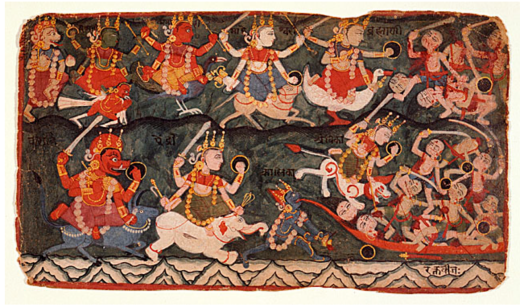
 As his army was being destroyed, Mahisasura assumed his buffalo form. The Devi bound the demon with Her noose, but he quitted his buffalo form and became a lion. As soon as She cut off his head, he appeared as a man armed with a sword. When She struck him with Her arrows, he changed into an elephant. As he tugged at Her lion, She cut off his trunk, and the demon resumed his buffalo form.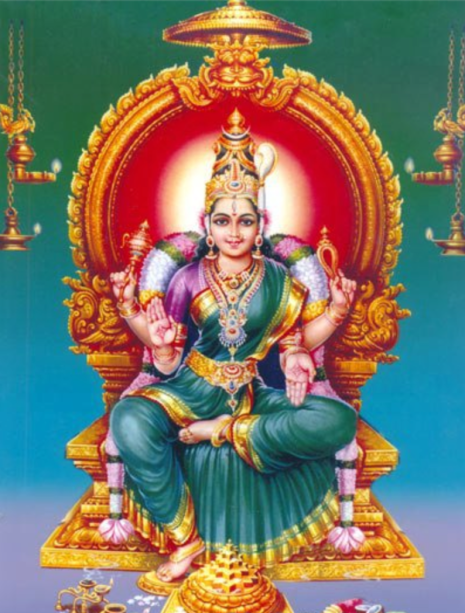

 Here Navaratri was celebrated in all its solemnity. Everywhere i.e., in all our branches, the devotees assembled in large numbers. Three of our centres i.e. HQ, Chatsworth and Pietermaritzburg had, of course did the navaratri function with Sri Sri Durga’s benign form without the demon Mahishasur in murti (3 ft height). These clay images were prepared locally by a lady devotee.
  In all this running about and stating the events with lots of “I” (which perhaps not pleasing to read), what was the feeling in the core of my heart? That She, the Divine Mother has been acting, directing and instructing and making me a worthy instrument in Her hands. I was ever praying that this blissful mood may continue.
 All the days were spent in a blissful mood for which we are grateful to our Sri Thakur, Ma and Swamiji. And this feeling of joy is nonetheless due to the gracious blessings of all senior monks and loving vibrations from the younger brothers all over the globe.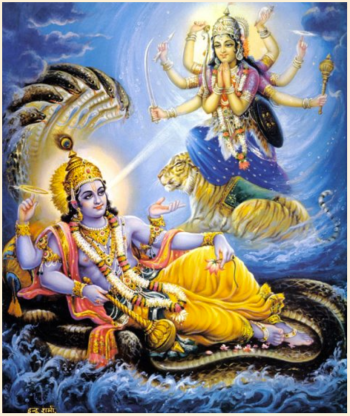





 Vedanta in Practice