Vedanta in Practice

A Micro-Blog from Swami Vimokshananda – earlier at Durban, Singapore and Dublin – now at Yelagiri Hills, Tamil Nadu, India – "A private diary for public consumption!"

  • Divine weddings
    Aum namash shivaaya

    In our Phoenix sub-centre, the gathering of senior citizens on every Tuesday is a big event. More than 500 people assemble – most start trickling into the campus as early as six in the morning. It is a joyful feeling to see them mingling in the crowd and talking to each other  thus creating a fine divine bond of relationship in the name of our Master.

    Many a time I do visit to address them for half an hour. It has benefitted me in a variety of ways: to look upon them as varied manifestation of Master and Mother; to enjoy the wonderful smiles on each of them; to engage them in some sort of philosophical thinking; to make them feel free and laugh so as to keep the negative, worrying thoughts at bay.

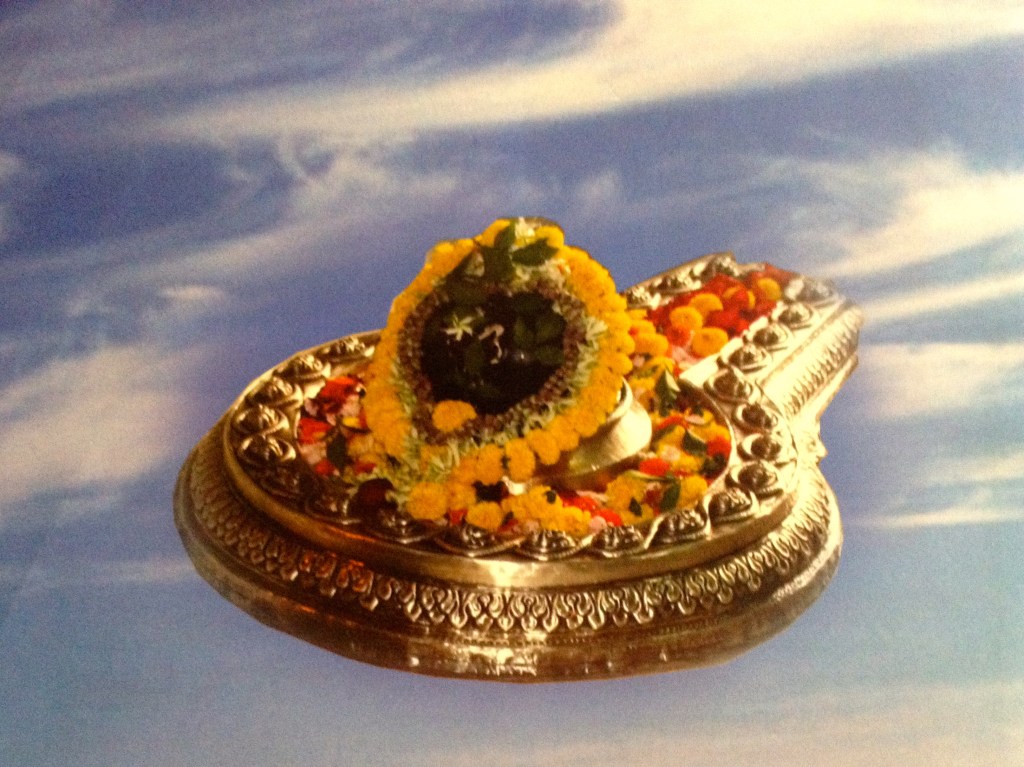
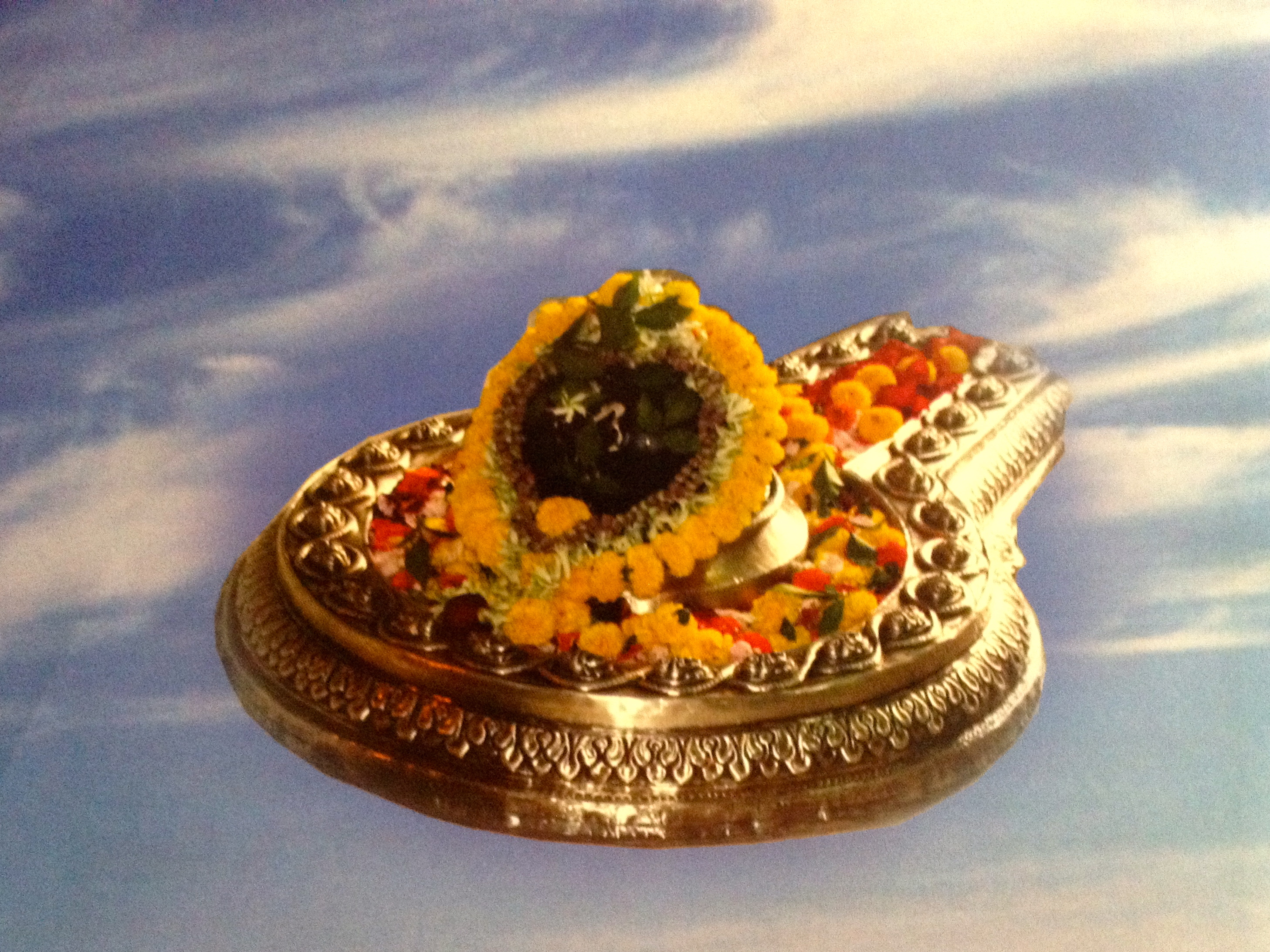
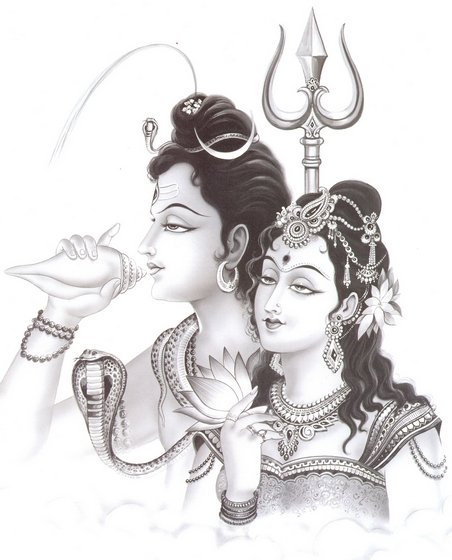
    Today when I stood before them and began my speech, I didn’t know what subject I should talk about. Mahashivaratri is on next Monday night. Why not I speak on Lord Shiva and Mother Parvati, I thought. I started thus: ” I just wonder whether I should greet you all a very happy Valentine’s Day?” That question brought loud laughter amongst the assembled senior citizens.

    jagatah pitarau vande paarvati parameshwarau – I bow down to Paarvati and Parameshwar the parents of the Universe

    The eternal love between the Divinities has had captured the imagination of very many poets. Puranas excel in retelling the story of wedding of Shiva and Shakti in most enjoyable form of narratives. So I went on to say about Shiva’s wedding with Parvati – one when She was born as a daughter of Daksha and another when she was born to Himavan.

    Both the wedding stories are fascinating. I adapted the former story  from Sri Ramacharitamanas of Saint Tulsidas and the latter heard from a katha-kalakshepam done by Kripananda Variyar many, many years back. Both kept the audience on tenterhooks.

    ==============================================

  • Prayer Power

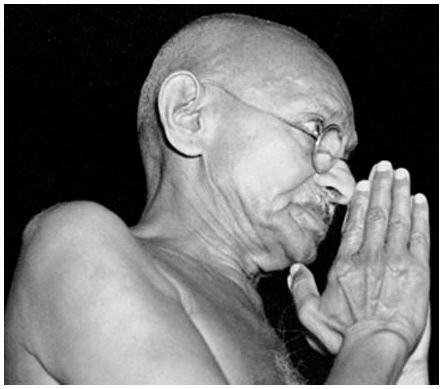
    Today we, with fondness and reverence, remember Mahatma Gandhi. His prayerful life was a powerful pointer in keeping the name of God in whatever situation one is. Just two days before his assassination, i.e., on 28th January he said: “If I am to die by the bullet of a mad man, I must do so smiling. There must be no anger within me. God must be in my heart and on my lips.”

    His connection with South Africa as given in History.com runs thus:

    Settling in Natal, he was subjected to racism and South African laws that restricted the rights of Indian laborers. Gandhi later recalled one such incident, in which he was removed from a first-class railway compartment and thrown off a train, as his moment of truth. From thereon, he decided to fight injustice and defend his rights as an Indian and a man. When his contract expired, he spontaneously decided to remain in South Africa and launched a campaign against legislation that would deprive Indians of the right to vote. He formed the Natal Indian Congress and drew international attention to the plight of Indians in South Africa. In 1906, the Transvaal government sought to further restrict the rights of Indians, and Gandhi organized his first campaign of satyagraha, or mass civil disobedience. After seven years of protest, he negotiated a compromise agreement with the South African government.

    According to him, “prayer is not an old woman’s idle amusement. Properly understood and applied, it is the most potent instrument of action.”

    As a sequel to the earlier Post on Master’s manifestation as Kalpataru in fulfilling the prayers of His devotees, I would like to narrate a few real life incidents here.

    Many of this Blog’s readers know that the Ramakrishna Centre in South Africa has 7 sub-centres and 8 Satsang groups. Some of my visits to certain Sub-centres have become routine: such as Chatsworth – every third Sunday for conducting Gospel class; Pietermaritzburg – every first Sunday for the same purpose. To Phoenix Sub-centre I generally go and address the Senior Citizens’ Forum, if not every month, at least more than 6 times a year.

    In my interaction with the devotees I am careful in learning how their spiritual life is strengthened and whether they did have any personal experience to narrate and so on. Its always inspiring to listen to such abiding and unforgetful experience even it be a dream, but ultimately the result is that the devotee stands to gain in making the nascent devotion steadfast to his/her chosen ideal.

    ****************************************

    A poor old widowed lady approached us at one of our our Sub-Centres requesting assistance with groceries. Upon enquiring about her situation at home, she informed us that she lived alone. Her son lived with his family far from her home. They rarely visited her and seldom they see to her needs. She became depressed and lonely, until she began attending the programs at our Sub-Centre regularly. One day she felt very sad and unhappy. She felt unloved and uncared for. That night she dreamt of Sri Sarada Devi, who spoke to her in Hindi and asked her why she was depressed. The Holy Mother said that she was watching over her and she need not be afraid. The Mother said that she was providing groceries to her every month and mentioned the items by name, – dal, rice, sugar etc – and all her needs were being taken care of, so why must she still worry? The old lady got up startled and felt very peaceful. When we started assisting her with groceries, she felt greatly blessed to have seen and heard the Holy Mother in her dream and she knew for certain her prayers were being heard. Within a short time she developed a deep and abiding faith in fulfilling power of our Holy Trio.

    ****************************************

    Another old widowed lady, who lives alone, had been informed that she would have to pay a few thousand Rands to have the title deed of her house transferred over to her name. She could not afford this amount and prayed to our Master to help her out of this situation. Within a short time she received a notification that this amount had been waived and the house was transferred onto her name. She became emotional after realizing it was through the grace of the Master as a consequent to her intense prayer that her problem had been resolved.

    ****************************************

    A frail looking old man who comes to our Sub-Centre regularly, once came with a bandage wrapped around his head. Upon enquiring if he had got hurt, he replied in the affirmative and said he had slipped in the bath-tub and fell, hitting his head. He remembered calling out to Mother Sarada and said it was indeed a miracle that he had not sustained any concussion or broken bones, and the strangest thing was that there was hardly any bleeding. He knew that Mother had protected him.

    ****************************************

    While ruminating over these faith-bearing incidents, I was reminded of another interesting incident that happened when I was in Ranchi Sanatorium.

    A devotee couple P & G used to come to the Ashrama regularly. One day the lady P was found very sad. Naturally I enquired what was the matter that made her so sad. She said that she was staying in the upper storey of the building and every day morning, on getting up from bed, she would look out through the windows and would be glad to see the freshly blossomed flowers. The sadness is due her inability to offer any of these beautiful flowers at the feet of the Master’s photo.

    I asked why she could not collect flowers from down below. She replied that she could not because that the garden was maintained by the ground floor police officer’s wife and she was for obvious reasons reluctant to ask favour from her knowing how that lady was not social. Lo! that was terrible for her! I consoled her saying that whenever she sits for her doing sadhana she should pray to Master that He may bless her by providing opportunity to do offering of flowers.

    This slideshow requires JavaScript.

    A few days passed. And one fine morning this devotee P came to Ashrama. She was palpably very happy. I could not contain my surprise and I had to ask her what was the reason that she was found in so happy mood! She replied with all enthusiasm, “Maharaj, today I could offer some of those beautiful flowers to Shri Thakur! Thats why I am so happy and came running to tell you.”

    I said, “Oh! thats wonderful! Finally Master has listened to your prayer! And you also could muster courage to ask favour from the police officer’s wife”! What she said was surprising to me. P continued, “Maharaj, no I did not go to her at all. This morning I heard some one knocking my door and when I opened it that woman was standing there. I was a little intrigued to find her as she never would even greet when our eyes met. She told me that yesternight she had a dream and in that dream she saw Thakur.”

    Obviously one can very well imagine that on hearing this our devotee P was very happy. She narrated what that police officer’s wife told her. “Look, I am not aware of your Thakur whom you worship. Your Thakur appeared in my dream and He was luminous. He ordered me to reach every day a few flowers at your doorstep every morning. He also said that these flowers are required for your daily puja. Thats why I have come to tell you. From now on, my servant will place a packet of flowers every morning. On seeing Shri Ramakrishna, I felt unexplainable peace!”

    While narrating this most pleasant incident the devotee P broke into tears and once again she looked very sad. I told her, “See P, you have no reason to be sad now. Thakur has fulfilled your intense prayer. Are these tears, tears of joy or sorrow?”

    Her husband G, who was standing nearby replied, ” Maharaj, this is really tears of sorrow.”

    I was stunned! P continued, “Why you know Maharaj!, because that lady had never worshipped Thakur even by mistake. I had been a devotee of the Master from my childhood days. See, that she had ‘darshan’ of Thakur and I have never had till now!”

    Well, I didn’t know whether to weep or laugh! strange are the ways of Almighty! Inscrutable is His maya!!

    ============================

  • Fulfillment Day

    Om Namo Narayanaya!

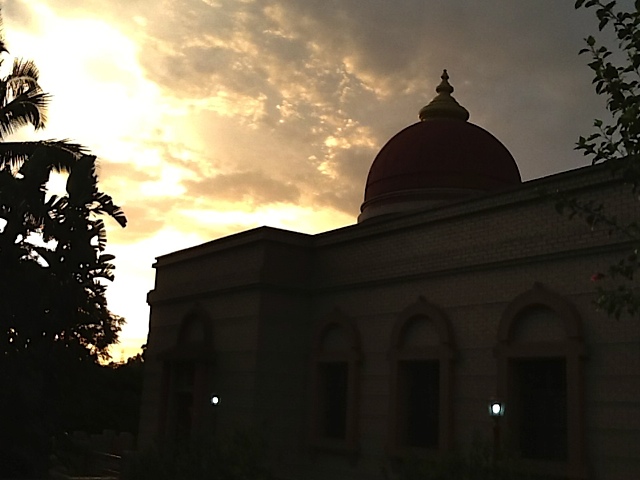
    O! the year 2011! I bid you adieu as I watched the sun setting yesterday from standing by the side of the main dome of our Temple! It was absolutely scenic but fastest fleeting as I tried to catch the mood with my iPad…the rains came refreshingly  in a downpour!

    I convey my love and best wishes and also of brother Swami Saradaprabhanandaji Maharaj to every one of you on this happy New Year Day! The officials from headquarters and devotees too join me in wishing you a happy New Year and Blessed Kalpataru day!

    Why a New Year Day is important in our lives? Is the novelty of the coming year connected merely with the numbers on the calendar? Or is it something more than a mathematical event? Days after days, months after months and as the Time progresses, finally we wake up to a First Day of the next Year – calling it a New Year. This New Year Day, no doubt makes us feel happy. It brings lot of hopes. It fetches desires to fulfill many aspirations.

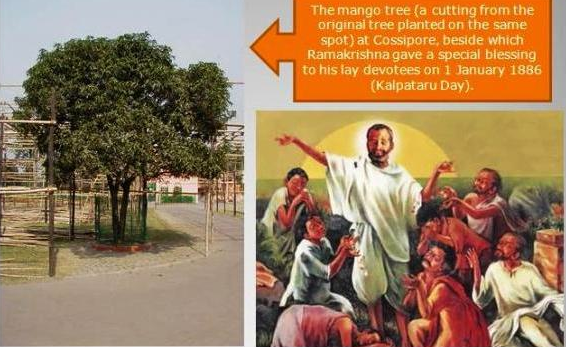
    Undeniably, this New Year Day is eulogised as ‘Kalpataru Day’ in the Ramakrishna circle of devotees. Below are some excerpts from the Editorial that appeared in Vedanta Kesari of January 1987, throwing some light on the deeper significance of the historical event.

    Swami Akhandananda writes, “It is an auspicious day for all of us. Our Master became the Kalpataru to bless his disciples at Cossipore (a Calcutta suburb). Kalpataru is one of the five trees of Heaven or Indra’s Paradise that is supposed to fulfil desires. The other four are Mandaram, Santanam, Harichandanam and Parijatam.”

    May this Day train us and make us deserving to receive the boundless grace of the Master!

    Swami Vimokshananda

    The first day of January, besides being the New Year day, is of special significance to a Ramakrishna-devotee. This is the day of the Self-revelation of the Great Master Sri Ramakrishna when he became, what is now popularly called, the Kalpataru `the wish-fulfilling tree.’

    It happened in 1886 at Kasipur where the Master had been undergoing treatment for his throat cancer. On January 1st, he felt particularly better and came down from his room for a stroll on the spacious lawns of the garden-house. About thirty devotees were present and were scattered here and there in the garden. As soon as they saw the Master, they all came near him and bowed down.

    To Girish, the Master said, `Girish, what have you seen that makes you glorify me publicly before one and all?’ Girish at once fell at the Master’s feet and said with folded hands and choked voice, `What more can I say of Him, even a fraction of whose glory Vyasa and Valmiki miserably failed to express in their immortal epics and Puranas?’ Hearing these words of Girish, the Master was deeply charmed and his mind soared to a high plane. Seeing the divinely illumined countenance of the Master, Girish was thrilled and he cried out in great joy, `Glory unto Ramakrishna! Glory unto Ramakrishna!’ and began taking the dust of his feet again and again. The Master looked at all present and said smilingly, `What more shall 1 say to you? May you all be spiritually awakened!’ No sooner had he said these few words than he went into Samadhi. What followed is best described in the words of Swami Saradananda, in his magnum opus ‘Sri Ramakrishna – the Great Master’, who had seen the whole episode from a distance:

    “When the devotees heard those words of blessings and protection from fear, they raised repeated cries of joy, exclaiming, `Glory to Ramakrishna.’ some of them saluted him, some showered flowers, some again came and touched his feet.”

    The Master touched the devotees in that state of Samadhi and blessed them all. The effect was instantaneous.

    How and when can this ‘Kalpataru‘ grace descend in our own life? True, divine grace is unconditional. Yet, in our heart of hearts, we do feel that without some sort of readiness to receive the grace, we make ourselves unfit for it.

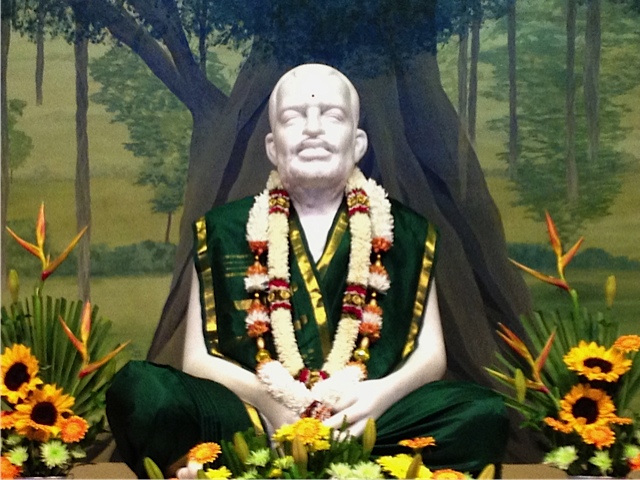
    Sri Ramakrishna's marble image – Blessings to all on this New Year's Day!

    That is the significance of the Kalpataru Day celebration on the 1st of January that is observed by the devotees of Ramakrishna.

    It is a reminder to every devotee of the unforgettable event at Kasipur and of the redeeming power of the Lord. It is also a gentle hint to a serious spiritual aspirant to look beyond the physical aspect of the episode and to concentrate on its spiritual implications. It is in this sense that the bestowal of the `Kalpataru grace’ is as valid and true today as it was then. And it is to recapture that mood of participation in the inspiring event at Kasipur that the 1st of January holds a special meaning to a Ramakrishna devotee.

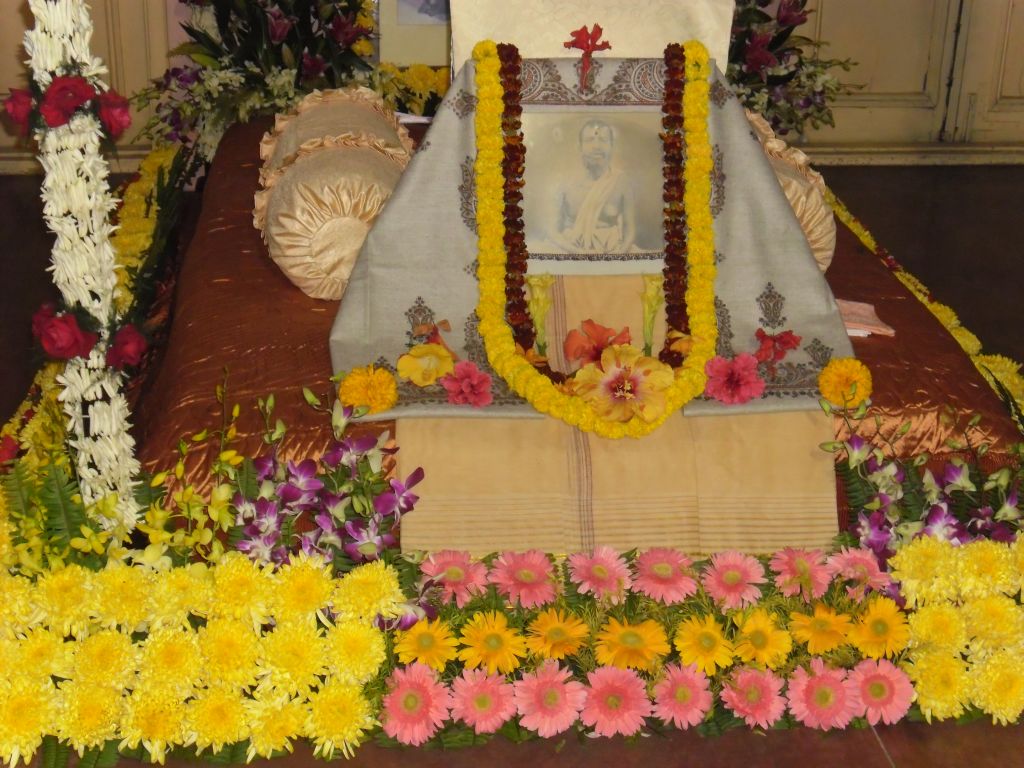
    Here is a latest photo of the Master's room in Cossipore Garden-house. Today stream of devotees are visiting in a seemingly unending queue to witness the beautifully floral bedecked bed where he attained mahasamadhi on 16 August 1886. Image courtesy: Swami Nityatriptananda

    ====================================

  • Sur and Asur
    Saint Sri Thyagaraja’s music is indeed sublime because it emerged from the privacy of his soul. It is one of the greatest aspects of Sri Thyagaraja that he made the infinite (Sri Rama) accessible to us through music. His numerous kritis include beautiful raagam, bhaavam and taaLam, with lovely lyrics, music, and devotion. 690 kritis in 160 raagams are available today.

    Music is an inextricable part of Hinduism. The origin of musical notes is traced to the ancient Saama Veda which is one of the four Vedas. While some modern scholars may call this as ‘deceptively simplistic’, yet there are indications from the scriptures such as Bhagavad Gita and saints like Thyagaraja that music does have origin in Vedas. “Among all Vedas”, Bhagavan Sri Krishna says that he “is Saama Veda“.

    The Saama Veda mantras are not merely recited, they are actually sung. The lines have specific metres and the singers of this Veda are called ‘Udgaatri priests’. Their singing is called ‘Udgita’. A poetic passage from the Chandogya Upanishad which is part of Saama Veda says:

    ” This Om , this imperishable Udgita must be worshipped. Of all the objects of creation, the Earth is the essence; of Earth, the essence is water; of Water, the essence is Herbs; Man is the essence of the Herbs; Poetry is the essence of (man’s) Speech; Music is the essence of Poetry; the Udgita of Saama Veda embodied by the Pranava is the essence of Music; thus, this Omkaara (Pranava Naada) is the utmost, the most valuable, the final essence of all essences. It must be worshipped.”

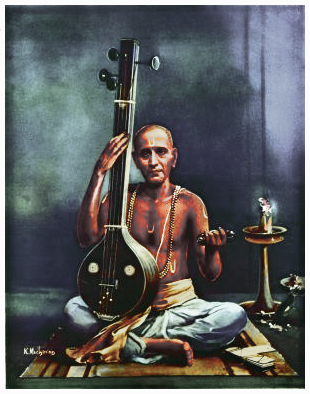
    Sage Yagnyavalkya of the Upanishadic period has also clarified that one obtains the boon of moksha by the singing of the Samans to the accompaniment of the Vina, a popular string instrument invariably seen at the hands of Devi Saraswati. He says: ” He who knows the truth of Vina Music and who is an expert in Srutis (musical notes) and Taalas (beats) reaches the path of salvation effortlessly”.

    Saint Thyagaraja, one of the greatest propitiator of Bhagavan Sri Ramachandra realised Him through his music. Thygaraja pays obeisance  to Narada as his Guru Raya for knowing the truth of Music originating from the Veda-born Vina. The importance of Saama Gaana is inferred from the tradition of Vina being played in major Vedic sacrifices such as Aswameda Yajna.

    So, dear readers, if you need more info on how Thyagaraja sings the glory of seven swaras tracing their origin to Saama Veda, please read here.

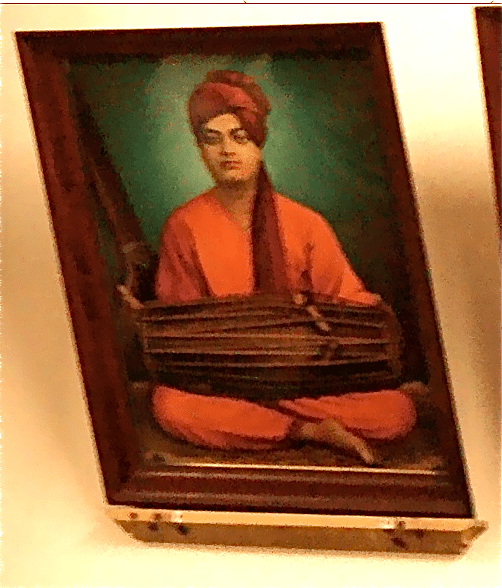
    In Sangit Mahabharati, an eminent music Institute in Juhu, Mumbai the walls are decorated with photos/paintings of top Hindustani musicians of India for past 2 centuries or so. Out of those one was that of Swami Vivekananda playing on pakhawaj,

    In the modern form of Hindustani Classical music, Ramakrishnabua Vaze (1858-1943) was a great proponent of music teaching. He recollects in his book Sangeet Kala Prakash II that once on his return from Nepal, Vaze was the guest of Swami Vivekananda. Swamiji was at that time residing in an ashram at Bareilly. In the presence of a few local music votaries, Swamiji would tune his two tanpuras and to the delight of every one, would sing raaga ‘ahir bhairav’, undisputably a morning melody in the very small hours of the day, hearing which the residents of the ashrama would wake up!

    Swamiji was not only an expert musician, but also a poet. He wrote a few inspiring poems in English. I was actually wondering whether these English songs have been ‘tuned-in’ and sung by any one. To my utter pleasure, I found 9 Vedanta songs based on Swamiji’s poems sung here.

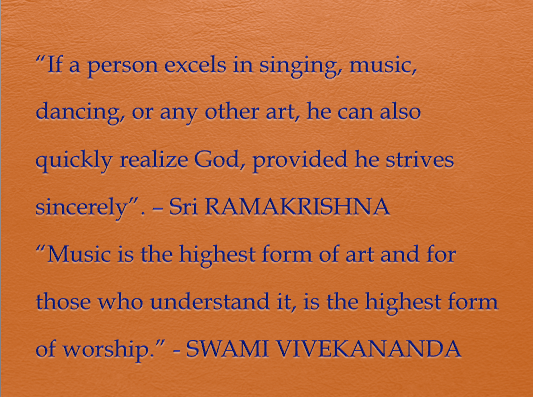
    It is well known now that many of Kaviguru Rabindranath Tagore‘s songs like “Gaganer Thale” in Raga Jaijaiwanti, a night melody, were musically set to tune by Narendranath (earlier name of Swamiji), and his rendition of this composition made it sublime and heavenly. For Swami Vivekananda, music “is the highest form of art and those who understand it, is the highest form of worship.”

    Many of our centres in India encourage the music rendition displayed during several programs. One of our Koklata branches, the Institute of Culture, organises a day-long music program extending into night of the 12th January which is Swamiji’s birthday. Here many talented internationally famous as well as local artistes participate in paying a musical homage to Swamiji. It is not uncommon that such cultural programs are looked upon as a means of fund raising too. When I joined Kanpur Ashrama in 1971, I heard from the seniors that the famous M S Subbalakshmi performed a concert to help build the Library Hall there.

    Recently the Pietermaritzburg Sub-centre in South Africa arranged a fund raising program for the rebuilding of the upper hall. The music rendition was by Shanjeet Teeluck. The multicultural concert was truly brilliant. The concert began with Pranam Mantra to Holy Trio by Revathy Maharaj followed by a spectacular bharatanatyam dance by Aashmuki Teeluck.

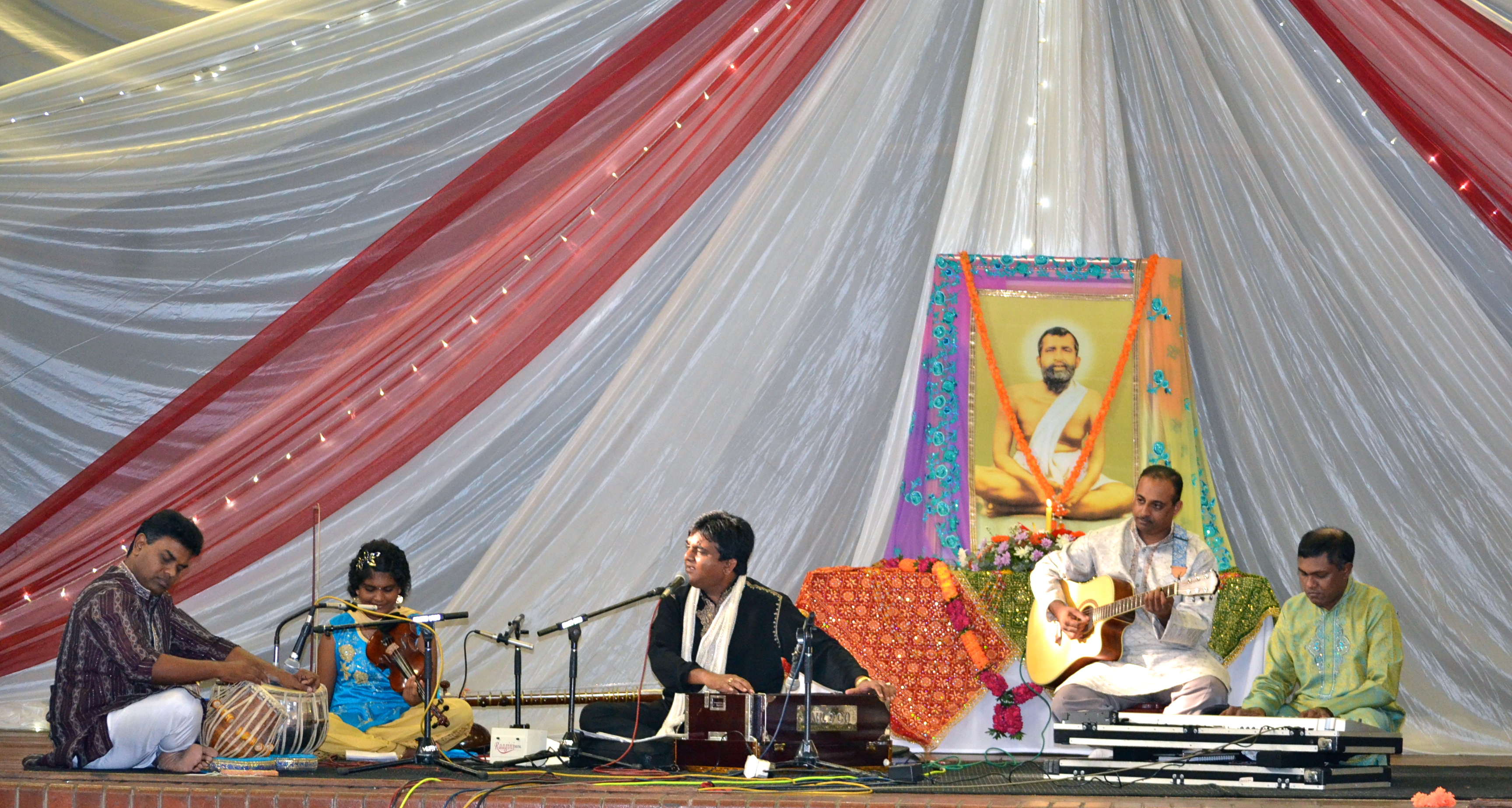
    Shanjeet Teeluck, together with his accompaning artistes rendered melodious bhajans, ghazals, Golden Oldies and instrumental music. A gathering of approx 600 people intently listened to the melodious devotional bhajans. I was taken to a higher dimension when Shanjeet began his rendition with my favourite song composed  by Sri Tulsidasji ‘Sri Raamachandra kripaalu bhajamana’. An air of spirituality radiated in Truro Hall on that Sunday afternoon. Besides vocal singing, he played deftly Harmonium and Sitar too which added to the sweetness of the cool evening. He was ably assisted by different accompanying artistes viz.,Vishen Kemraj on Tabla, Rajive Mohan on Keyboard, Umesh Inderparsad on Guitar, and the little Shruti, daughter of Shanjeet on Violin. Intermittently Dipika Ramadeen gave enchanting Kathak performances too. The stage was well managed by Ishara Anirudh.

    Devotional concert by Shanjeet Teeluck and his accompanying artistes
    Devotional concert by Shanjeet Teeluck and his accompanying artistes

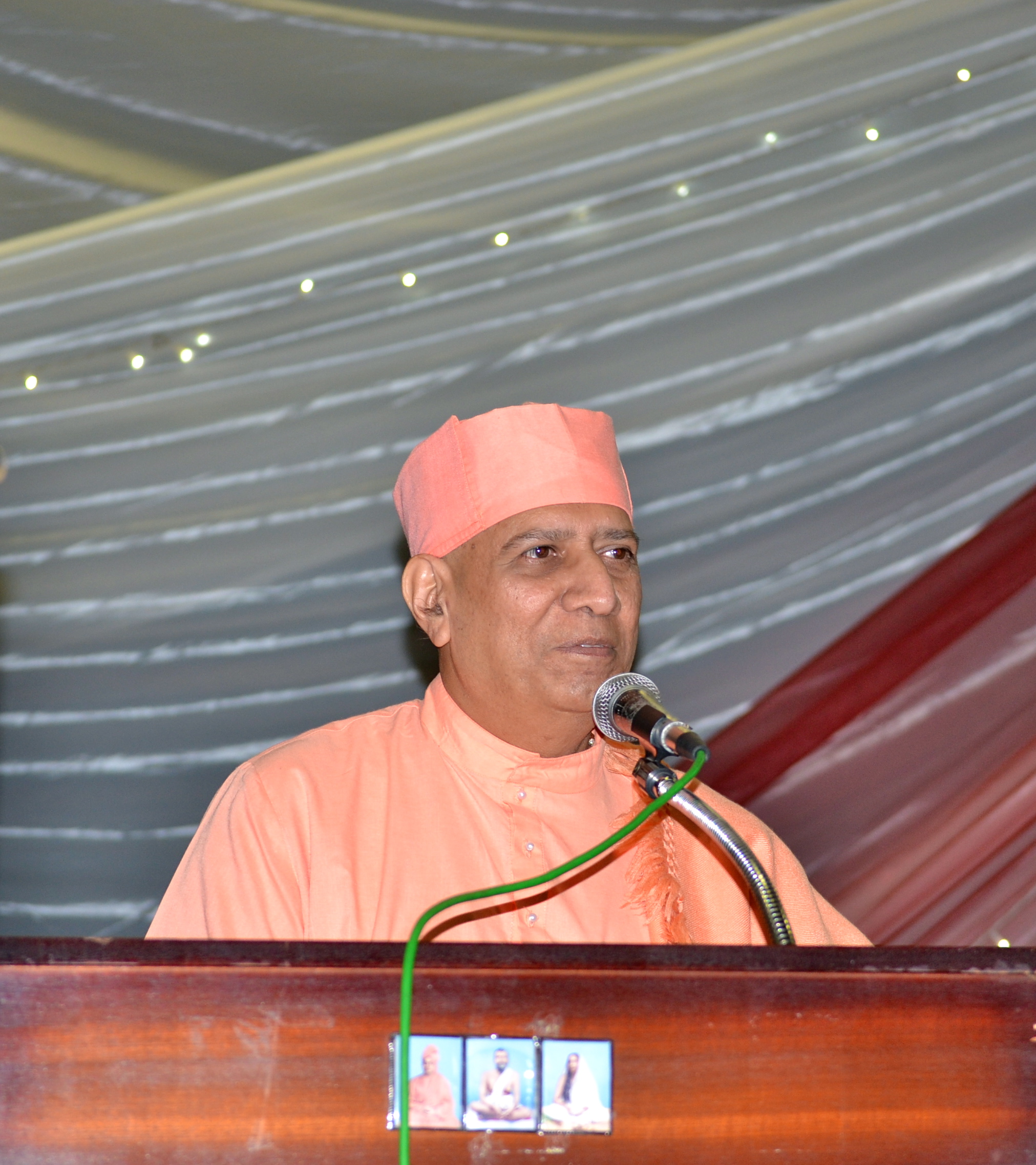
    Amidst the music outpourings, an invite to me by Barry Swaminathan, who was an MC, to deliver a benedictory address drew me down from the ethereal heights to earthly! Aware of my duty-bound limitation, I stepped onto the stage and tried to recollect how music has been a great source of subjugating the vagaries of mind. I narrated how the raaga anandabhairavi as researched by violin maestro Kunnakudi Vaidyanathan in classical Karnatik music is efficient in bringing down the blood pressure.

    Swami Vimokshananda addressing the audience

    Though in English grammar classes we are taught that the term ‘composition’ means writing of essays, the very word signify ‘calming of the mind’ as ‘sur‘ implies. Calmness – a state of being composed – comes due to the discipline of mind. That’s why, I added that one who is  indisciplined is called ‘a-sur’. The mythological asuras are none but a bunch of indisciplined lot! Then I went on to appeal to all the connoisseurs to train their children in any form of fine arts.

    And the next Sunday evening once again took me delightfully to Kendra Hall in Durban where I was absorbed in a bhajan sandhya program of Pandit Ravindra Joshi accompanied by his wife Bhavna Joshi. The duo sang some wonderful bhajans. The instrumental background was indeed impressive.

    ===========================

  • Joyous Jagaddhatri

    Sri Lalita Sahasranama in its 173 verse speaks of Goddess Tripurasundari as Jagaddhatri
    Vishvamaataa jagaddhaatri vishaalaakshi viraagini
    Pragalbhaa paramodaaraa paraamodaa manomayi 
    Vishvamaataa: Who is the Mother of the Universe,  Jagaddhaatri:  Who is the holder of the universe, Vishaalaakshi: Who has large eyes, Viraagini: Who is utterly passionless, Pragalbhaa: Who is surprisingly daring, Paramodaara: Who is supremely generous, Manomayi: Who is all mentation.

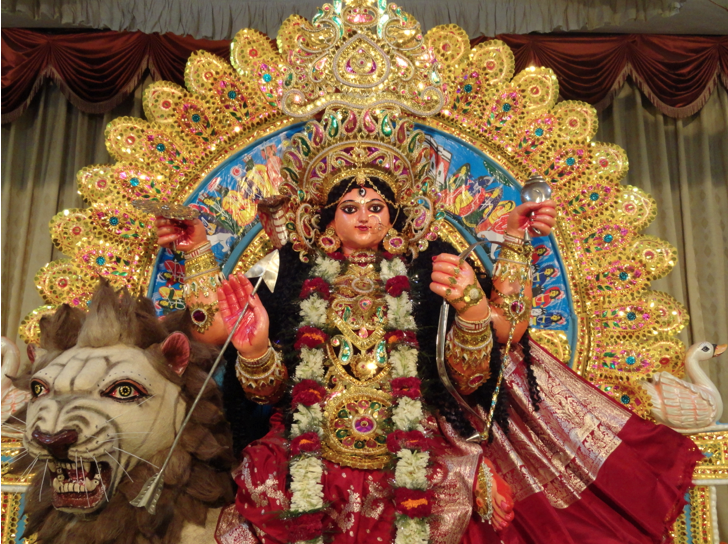
    Divine Mother Sri Sri Jagaddhatri in full regalia – clay image used for worship at Ranchi Ramakrishna Mission TB Sanatorium, Courtesy: Raju

    Today is navami tithi when Sri Sri Jagaddhatri puja is performed in the eastern parts of India. After the Master’s puja this morning I was immersed in the thoughts on Ma Jagaddhatri. There is a beautiful hymn on Her which when repeated gives an elevating experience. To my heart’s content I chanted this Jagaddhatri stotram.

    In the Ramakrishna tradition, Jayarambati, where Holy Mother Sarada Devi was born, this puja was started. I wrote earlier about the famous Jagaddhatri puja in Ranchi Sanatorium with the title Magnanimous Mother wherein I gave the mythological backround and how it all began at the Sanatorium where TB patients are treated. It is indeed interesting how this charming puja began at Jayarambati itself and how Holy Mother was involved in it. I reproduce some extracts from Holy Mother Sri Sarada Devi written by Swami Gambhiranandaji Maharaj.

    Once, at the time of Kali worship, Nava Mukherji, as a result of some village feud, did not accept the gifts of rice and other things from Shyamasundari Devi, which were her contribution to the joint endeavour at worship. She had gathered together these things with the greatest effort and utmost sincerity; but another man’s cruelty now deprived her of the chance of offering them to the Deity. Her sorrow was so painful that she spent a sleepless night and went on repeating, ‘This rice I prepared for Kali, and this has not been accepted! Who will now eat this? Indeed it is Kali’s rice, and nobody else can eat it!’ Then a Deity appeared to her in a dream and awakened her by patting her body. Opening her eyes, Shyamasundari Devi saw the Deity, red in hue, sitting near the door with one leg placed over the other, who said, ‘Why do you weep? I shall eat Kali’s rice. Why do you worry?’ Shyamasundari inquired, ‘Who are you?’ The Deity replied, ‘I am the Mother of the Universe: I shall accept your worship as Jagad-dhatri.’

    Next morning, Shyamasundari Devi said to the Holy Mother, ‘Dear Sarada, who is that Deity with red hue, resting one leg on the other?’ The Mother said, ‘She is Jagad-dhatri, to be sure.’ Grandmother then said, ‘I shall worship jagad-dhatri.’ She went on talking about that worship off and on. She secured from the Vishwas family about 400 lbs. of paddy. It was then raining incessantly. Grandmother said, ‘Mother, how shall I worship you? I can’t so much as dry the paddy.’ But through the grace of’ the Goddess it so happened, that though it rained all around, grandmother’s mat, on which the paddy was spread, had plenty of sunshine; and she got it husked and converted, into rice. The clay image of the Deity had to be painted after drying it under fire. Uncle Prasanna went to Dakshineswar to invite Sri Ramakrishna for the celebration. But he said, ‘Mother will come, aye! Mother will come! ‘That’s. excellent. But weren’t you in very straitened circumstances, my dear?’ Uncle replied, ‘You have to come, I have come to take you.’ The Master said, ‘I am as good as already there. It’s fine. Go, and have the worship. It’s fine indeed! It will do you good.’ The worship was duly performed. Many people from far and near were invited and heartily fed. The rice was enough for all. At the time of the immersion of the image grandmother whispered in the ears of the Goddess, ‘My dear, Jagai, do come again next year. I shall be making arrangements for you all the year round.’

    Next year, grandmother said to the Holy Mother, Look here, dear, you too should contribute something; my Jagai (Jagad-dhatri) will be worshipped.’ The Mother remonstrated, ‘I can’t bear all that trouble. It’s enough that you had the worship once; why rake up troubles again? There’s no need; I can’t do it.’ Then she saw three figures in a dream at night – Jagad-dhatri, with her maids Jaya and Vijaya – who said, ‘Well, shall we go then?’ ‘Who may you be?’ the Mother queried in surprise. I am Jagad-dhatri,’ said the Deity. At this the Mother said in great consternation, ‘No, where will you go? Do stay on, I didn’t ask you to go.’ Thenceforth the worship continued uninterruptedly for some years. The Mukherji family had not then enough hands to help in the festival. So the Holy Mother had to be present every year for scouring the utensils and doing some other odd jobs.

    As the day of immersion of the image on the first occasion happened to be a Thursday sacred to the goddess of fortune, the Holy Mother objected to bidding farewell to Jagad-dhatri on that day. The next day was the last day of the month, and the next the first day of another month. Hence the immersion took place on the fourth day.

    The worship in the first four years was performed in the name of Shyamasundari Devi, in the second four, in the name of the Holy Mother, and in the next four in the name of her uncle Nilmadhav. The Holy Mother felt no need for continuing the worship after twelve years, because all had had their names formally proposed as worshippers. That very night after she had made the declaration, the Deity appeared to her in a dream and intimated that the family of Madhu Mukherji’s aunt had it in mind to worship Her, and asked her three times, ‘Shall I go then?’ The Holy Mother realized that Jagad-dhatri wanted to leave her after getting her affirmation; and so she took hold of the feet of the Deity and said eagerly, ‘I won’t let you go any more, I shall worship you every year.’ With this determination in mind, she later on secured about three and a half acres of paddy land with which she made a trust for the continuance of the worship. With the income from this land and some contributions from devotees, the authorities of the Ramakrishna Math, Belur, perform the worship every year with due pomp, at the Mother’s temple at Jayrambati. And as in the first year, so now too, the worship continues for three successive days – on the first day with all ceremonials but on succeeding days not so elaborately as was the custom during Mother’s lifetime. One on each side of the main Deity Jagad-dhatri, are placed images of Jaya and Vijaya. The devotees of the Holy Mother believe that as the Mother was none other than Jagad-dhatri Herself, when the latter is worshipped the Holy Mother too is adored as a matter of course.

    =======================================